Canberra’s Origins: From Ancient Aboriginal Lands to Australia’s Planned Capital
Posted by on
The land where Canberra now stands carries a deep and ancient history. Archaeological evidence shows that Aboriginal Australians had lived in the region for up to 21,000 years, with the Ngunnawal and Ngambri peoples recognized as its traditional custodians. Their strong cultural connection to the land continues to shape the city’s identity, with Indigenous heritage acknowledged throughout the region.
European settlement in the area began during the first half of the 19th century, leaving behind historical landmarks that still stand today, including St John’s Anglican Church and Blundells Cottage. These early colonial structures offer glimpses into the early pastoral life of settlers long before Canberra’s transformation into a capital city.
The push for a national capital began after the Federation of Australia on 1 January 1901, when the six colonies united to form the Commonwealth. A heated debate arose between Sydney and Melbourne over which should serve as the capital. To resolve the dispute, a compromise was reached: a new city would be built in New South Wales, but it had to be at least 100 miles (160 km) from Sydney. This agreement led to the selection of the Canberra region as the future seat of government.
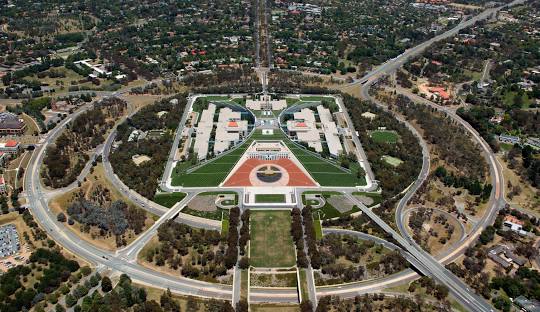
The city of Canberra was officially founded and named in 1913, and its layout was determined through an international design competition. The winning design came from American architect Walter Burley Griffin and his wife Marion Mahony Griffin, whose visionary plan created one of the few entirely planned cities in the world. Their design featured geometric patterns, broad avenues, and axial alignments that integrated the natural landscape—connecting key landmarks like Black Mountain, Mount Ainslie, Capital Hill, and City Hill.
Canberra’s mountainous setting adds to its distinct character, offering views of snow-capped peaks during much of the winter—making it the only mainland Australian city where such scenery is visible. While snowfall within the city itself is rare, the surrounding ranges give Canberra a unique blend of natural beauty and architectural precision.
From its ancient roots as a gathering place for Aboriginal peoples to its modern identity as Australia’s political and cultural center, Canberra stands as a symbol of compromise, design innovation, and national unity.