Canberra Furniture Shop represents a vital part of the local retail landscape, providing residents and businesses in Canberra access to a diverse range of furniture options that combine style, quality, and functionality. Canberra Lounge Suites Whether furnishing a new home, upgrading an office, or seeking unique handcrafted pieces, Canberra's furniture shops cater to varied tastes and budgets.
One notable example is Eclipse Handcrafted Furniture, which has earned a strong reputation for its artisanal approach to solid timber furniture manufacturing. Founded by Ross and Juli Triffitt, Eclipse offers custom-made hardwood furniture crafted to last a lifetime, using sustainably sourced Australian timbers such as Red Gum and Tasmanian Oak. Their product range includes heirloom-quality tables, sideboards, and chairs, each piece imbued with thoughtful design and craftsmanship.
Designs made in Canberra for homes that love smart simplicity.
Minimalist style perfect for Canberra homes that love space.
Canberra Furniture Inspiration
Dining Furniture Stores Canberra
Customers appreciate the uniqueness and durability of Eclipse's furniture, often visiting their Wagga or Sydney showrooms or browsing online[1].
For those seeking affordability without compromising on style or availability, Monster Furniture in Fyshwick is a prominent choice. This store offers a wide selection spanning classic to contemporary designs at competitive prices, supported by a warehouse model that keeps costs down. Their in-stock inventory allows customers to avoid long wait times, and knowledgeable staff assist buyers in finding pieces that fit both aesthetic and practical needs. Monster Furniture's service area covers Canberra and surrounding suburbs, making it accessible for many locals[3].
Other furniture stores such as Marco Furniture also contribute to Canberra's rich furniture market, offering a range of home furnishings including dining chairs, coffee tables, and wine cabinets, with over 15 years of experience in delivering quality and style to the community[5]. Additionally, stores like Lounge Lovers and Warehouse Furniture Clearance provide specialized offerings in lounge and clearance furniture, enhancing consumer choice further[7][13].
In summary, Canberra Furniture Shops collectively offer a broad spectrum of options, from handcrafted artisanal pieces to affordable, ready-to-buy furniture.
Scandi-style furniture so clean and calm even Canberra agrees.
Tuggeranong’s furniture that makes every house a little more inviting.
Their presence supports residents in creating comfortable, stylish living and working environments tailored to individual preferences and budgets. Whether seeking timeless elegance or modern practicality, Canberra's furniture retailers provide quality products with dedicated customer service, reflecting the city's diverse lifestyle needs.
Along with stone, clay and animal parts, wood was one of the first materials worked by early humans. Microwear analysis of the Mousterianstone tools used by the Neanderthals show that many were used to work wood. The development of civilization was closely tied to the development of increasingly greater degrees of skill in working these materials.
Among the earlliest finds of woodworking are shaped sticks displaying notches from Kalambo Falls in southern Africa, dating to around 476,000 years ago.[1] The Clacton spearhead from Clacton-on-Sea, England, dating to around 400,000 years ago,[2] the Schöningen spears, from Schöningen (Germany) dating around 300,000 years ago[3] and the Lehringen spear from northern Germany, dating to around 120,000 years ago,[4] provide some of the first examples of wooden hunting implements. Wooden tools likely used for domestic activities including probable awls have also been found at Schöningen.[5]
Examples of Bronze Age wood-carving include tree trunks worked into coffins from northern Germany and Denmark and wooden folding-chairs. The site of Fellbach-Schmieden in Germany has provided fine examples of wooden animal statues from the Iron Age. Wooden idols from the La Tène period known from a sanctuary at the source of the Seine in France.
There is significant evidence of advanced woodworking in ancient Egypt.[6] Woodworking is depicted in many extant ancient Egyptian drawings, and a considerable amount of ancient Egyptian furniture (such as stools, chairs, tables, beds, chests) have been preserved. Tombs represent a large collection of these artifacts and the inner coffins found in the tombs were also made of wood. The metal used by the Egyptians for woodworking tools was originally copper and eventually, after 2000 BC bronze as iron working was unknown until much later.[7]
Woodworking was essential to the Romans. It provided material for buildings, transportation, tools, and household items. Wood also provided pipes, dye, waterproofing materials, and energy for heat.[10]: 1 Although most examples of Roman woodworking have been lost,[10]: 2  the literary record preserved much of the contemporary knowledge. Vitruvius dedicates an entire chapter of his De architectura to timber, preserving many details.[11]Pliny, while not a botanist, dedicated six books of his Natural History to trees and woody plants, providing a wealth of information on trees and their uses.[12]
The progenitors of Chinese woodworking are considered to be Lu Ban (é¯ç pinyin: LÇ”bÄn) and his wife Lady Yun, from the Spring and Autumn period (771 to 476 BC). Lu Ban is said to have introduced the plane, chalk-line, and other tools to China. His teachings were supposedly left behind in the book Lu Ban Jing (é¯ç經, "Manuscript of Lu Ban")(é¯ç經 pinyin: LÇ”bÄn jÄ«ng). Despite this, it is believed that the text was written some 1500 years after his death. This book is filled largely with descriptions of dimensions for use in building various items such as flower pots, tables, altars, etc., and also contains extensive instructions concerning Feng Shui. It mentions almost nothing of the intricate glue-less and nail-less joinery for which Chinese furniture was so famous.
CNC machine that operates on woodWoodworking apron
With the advances in modern technology and the demands of industry, woodwork as a field has changed. The development of Computer Numerical Control (CNC) machines, for example, has made it possible to mass-produce and reproduce products faster, with less waste, and often with more complex designs than ever before. CNC wood routers can carve complicated and highly detailed shapes into flat stock to create signs or art. Rechargeable power tools speed up the creation of many projects and require much less physical strength than in the past—for example, when boring multiple holes.
Skilled fine woodworking, however, remains a craft pursued by many. There remains demand for handcrafted work such as furniture and art; however, with the rate and cost of production, the price for consumers is much higher.
Modern wood carving usually refers to works of wood art produced by woodcarvers in the form of contemporary art. This type of woodcarving often combines traditional techniques with more modern artistic styles and concepts. Modern woodcarving can be produced in a variety of forms and styles, from realist to abstract carvings, and often uses unusual wood materials such as rain tree wood or wood with unique textures to highlight the uniqueness of the work.
In recent years, the art of modern woodcarving has become increasingly popular among woodworkers and visual art enthusiasts not only in Asia, but also around the world. Modern woodcarving art is often exhibited in art galleries and museums, and can be seen in several global contemporary art exhibitions.
Woodworking, especially furniture making, has many different designs/styles. Throughout its history, woodworking designs and styles have changed. Some of the more common styles are listed below. Traditional furniture styles usually include styles that have been around for long periods of time and have shown a mark of wealth and luxury for centuries. More modern furniture styles are commonly used over the past few hundred years.[13]
Historically, woodworkers relied upon the woods native to their region, until transportation and trade innovations made more exotic woods available to the craftsman. Woods are typically sorted into three basic types: hardwoods typified by tight grain and derived from broadleaf trees, softwoods from coniferous trees, and man-made materials such as plywood and MDF.
Hardwoods, botanically known as angiosperms, are deciduous and shed their leaves annually with temperature changes.[14] Softwoods come from trees botanically known as gymnosperms, which are coniferous, cone-bearing, and stay green year round.[14] Although a general pattern, softwoods are not necessarily always "softer" than hardwoods, and vice versa.[15]
Softwood is most commonly found in the regions of the world with lower temperatures and is typically less durable, lighter in weight, and more vulnerable to pests and fungal attacks in comparison to hardwoods. They typically have a paler color and a more open grain than hardwoods, which contributes to the tendency of felled softwood to shrink and swell as it dries.[15] Softwoods usually have a lower density, around 432–592 kg/m3, which can compromise its strength.[15] Density, however, does vary within both softwoods and hardwoods depending on the wood's geographical origin and growth rate. However, the lower density of softwoods also allows it to have a greater strength with lighter weight. In the United States, softwoods are typically cheaper and more readily available and accessible.[15] Most softwoods are suitable for general construction, especially framing, trim, and finish work, and carcassing.[16][15]
Hardwoods are separated into two categories, temperate and tropical hardwoods, depending on their origin. Temperate hardwoods are found in the regions between the tropics and poles, and are of particular interest to wood workers for their cost-effective aesthetic appeal and sustainable sources.[15] Tropical hardwoods are found within the equatorial belt, including Africa, Asia, and South America. Hardwoods flaunt a higher density, around 1041 kg/m3 as a result of slower growing rates and is more stable when drying.[15] As a result of its high density, hardwoods are typically heavier than softwoods but can also be more brittle.[15] While there are an abundant number of hardwood species, only 200 are common enough and pliable enough to be used for woodworking.[17] Hardwoods have a wide variety of properties, making it easy to find a hardwood to suit nearly any purpose, but they are especially suitable for outdoor use due to their strength and resilience to rot and decay.[15] The coloring of hardwoods ranges from light to very dark, making it especially versatile for aesthetic purposes. However, because hardwoods are more closely grained, they are typically harder to work than softwoods. They are also harder to acquire in the United States and, as a result, are more expensive.[15]
Woodworking hand tools used in class at the Women's Woodshop in Minneapolis, Minnesota, USA
Typically furniture such as tables and chairs is made using solid stock from hardwoods due to its strength and resistance to warping.[16] Additionally, they also have a greater variety of grain patterns and color and take a finish better which allows the woodworker to exercise a great deal of artistic liberty. Hardwoods can be cut more cleanly and leave less residue on sawblades and other woodworking tools.[16] Cabinet/fixture makers employ the use of plywood and other man made panel products. Some furniture, such as the Windsor chair involve green woodworking, shaping with wood while it contains its natural moisture prior to drying.
Cedars are strong, aromatic softwoods that are capable of enduring outdoor elements, the most common of which is the western red cedar. Western red cedar can sustain wet environments without succumbing to rot, and as a result is commonly used for outdoor projects such as patios, outdoor furniture, and building exteriors. This wood can be easily found at most home centers in the US and Canada for a moderate price.[18]
Within the USA fir, also known as Douglas fir, is inexpensive and common at local home centers. It has a characteristic straight, pronounced grain with a red-brown tint. However, its grain pattern is relatively plain and it does not stain well, so fir is commonly used when the finished product will be painted. While commonly used for building, this softwood would also be suitable for furniture-making.[18]
White pine, ponderosa, and southern yellow pine are common species used in furniture-making. White pine and ponderosa are typically used for indoor projects, while Southern yellow pine is recommended for outdoor projects due to its durability.[19]
Ash is relatively easy to work with and takes stain well, but its white to light brown color with a straight grain is visually appealing on its own. However, ash is much more difficult to find than other common woods, and will not be found at the local home center. Larger lumber yards should have it in stock.[18]
Hardwood of the European species Fagus sylvatica is widely used for furniture framing and carcase construction, in plywood, musical instruments (drum shells and piano blocks) and turned items like knobs.[20]
Whether yellow or white birch, these hardwoods are stable and easy to work with. Despite this, birch is prone to blotching when stained, so painting birch products is probably best. Birch is easily found at many home centers and is a relatively inexpensive hardwood.[18]
Popular and easy to work with, cherry wood is in high demand for its reddish-brown color and ease of staining and finishing. Cherry likely will not be at the local home center, but should be at a lumberyard for a somewhat expensive price.[18] This hardwood is a very common material for furniture, and is resistant to normal wear-and-tear, but it is best for indoor pieces.[21]
A hardwood, mahogany has a trademark reddish-brown to deep-red tint and is known as "one of the great furniture woods". However, mahogany is not typically grown in sustainable forests, and thus runs a steep price at local lumber yards.[18]
With two varieties, red and white, oak is known to be easy to work with and relatively strong. However, furniture makers often opt for white oak over red oak for its attractive figure and moisture-resistance.[18] Depending on the kind needed, oak can probably be found at a local home center or a lumberyard for a bit pricier than other hardwoods.[22][18][21]
With strength, sturdiness, and durability, maple is a common material for furniture for the bedroom and even china cabinets. Maple is moisture-resistant and frequently displays stand-out swirls in the wood grain, an aesthetically pleasing differentiator from other hardwoods. While most commonly a lighter color, maple also can take stains and paint well.[21]
There are many factors to consider when deciding what type of wood to use for a project. One of the most important is the workability of the wood: the way in which it responds when worked by hand or tools, the quality of the grain, and how it responds to adhesives and finishes.[15] When the workability of wood is high, it offers a lower resistance when cutting and has a diminished blunting effect on tools.[15] Highly workable wood is easier to manipulate into desired forms. If the wood grain is straight and even, it will be much easier to create strong and durable glued joints. Additionally, it will help protect the wood from splitting when nailed or screwed.[15] Coarse grains require a lengthy process of filing and rubbing down the grain to produce a smooth result.[15]
Another important factor is the durability of the wood, especially in regards to moisture. If the finished project will be exposed to moisture (e.g. outdoor projects) or high humidity or condensation (e.g. in kitchens or bathrooms), then the wood needs to be especially durable in order to prevent rot. Because of their oily qualities, many tropical hardwoods such as teak and mahogany are popular for such applications.[15]
While many woods can be used for carving, there are some clear favorites, including aspen, basswood, butternut, black walnut, and oak.[23] Because it has almost no grain and is notably soft, Basswood is particularly popular with beginner carvers. It is used in many lower-cost instruments like guitars and electric basses.[23] Aspen is similarly soft, although slightly harder, and readily available and inexpensive.[23] Butternut has a deeper hue than basswood and aspen and has a nice grain that is easy to carve, and thus friendly for beginners. It is also suitable for furniture.[23] While more expensive than basswood, aspen, and butternut, black walnut is a popular choice for its rich color and grain.[23] Lastly, oak is a strong, sturdy, and versatile wood for carving with a defined grain. It is also a popular wood for furniture making.[23]
Each area of woodworking requires a different variation of tools. Power tools and hand tools are both used for woodworking. Many modern woodworkers choose to use power tools in their trade for the added ease and to save time. However, many woodworkers still choose to use only hand tools for several reasons such as tradition, the experience and the added character to the work, while some choose to use only hand tools simply for their own enjoyment.
Hand tools are classified as tools that receive power only from the hands that are holding them. Edged hand woodworking tools need to be sharpened which is done using the sharpening jig and sharpening stone. A more novel method involves the use of sandpaper.[24] The more common modern hand tools are:
Hand tools
Clamps
Woodworking clamps. Top left two are f-style clamps. On the right is a quick-grip Irwin clamp. In the bottom middle is a spring clamp.
Clamps are used to hold a workpiece while being worked. Clamps vary in all shapes and sizes from small c-clamps to very large bar or strap clamps.[25] A vise is a form of clamp, temporarily or permanently mounted as required. A woodworking vise is a vise specialized to the needs of a woodworker; numerous types have evolved.
Chisels
Five woodworking wood chisels
Chisels are tools with a long blade, a cutting edge, and a handle. Used for cutting and shaping wood or other materials.[25]
Claw hammer
A common hammer, the claw hammer, used in woodworking and other activities
The claw hammer, which can hammer, pry, and pull nails, is the most common hammer used in woodworking.[25]
Hand plane
Two woodworking hand planes
A hand plane is used to surface aspects of a workpiece.
Square
A try square. A common style of square in woodworking usually used for 90 degree angles
The square is used to mark angles on any workpiece. An adjustable square also includes a ruler. A speed square can mark 90 and 45-degree fixed angles and any angle between 0 and 90 degrees using its long axis.[25]
Tape measure
Tape measure
A tape measure is a retractable or flexible ruler that has measurement increments as small as 1/32" or 1 millimetre.
Handsaw
Three old handsaws
A handsaw, according to Cambridge University, "a saw that is operated by hand rather than using electricity or a motor."[26]
Files & Rasps
Top two are files. The bottom (orange-handled) tool is a rasp.
Both files and rasps are used to grind down wood material either to make the surface flat, rounded, concaved, or many other shapes. Rasps make deeper cuts while files make smaller and less harsh cuts on the wood. The difference between the two is mainly their teeth size.[27]
Power tools are tools that are powered by an external energy such as a battery, motor, or a power cable connected to a wall outlet. The more common power tools are:[25]
Power tools
Drill
Cordless electric power drill.
The drill is a tool used to drill a hole or to insert a screw into a workpiece.[25]
Palm sander
Two palm sanders. Left sander is an orbital palm sander. The sander on the right is a mouse sander. Which uses vibration instead of orbital motions.
A palm sander is a small powered sander that uses either a vibration or orbital motion to move a piece of sand paper upon the workpiece making very fine modifications in smoothing your product.[25]
Compound miter saw
Electric compound miter saw.
A compound miter saw, also known as a chop saw is a stationary saw used for making precise cuts across the grain path of a board. These cuts can be at any chosen angle that the particular saw is capable of.[25]
Table saw
Electric plug-in tablesaw for woodworking.
A table saw is intended to make long precise cuts along the grain pattern of the board known as rip cuts. Most table saws offer the option of a beveled rip cut.[25]
Thickness planer
A thickness planer is used to smooth the surface of a board and make it the exact thickness across the entire board.[25]
Jointer
Powermatic jointer for woodworking.
A jointer is used to produce a flat surface along a board's length and to create a square (or 90°) edge between two adjoining surfaces.[25]
Band saw
Plug-in band saw.
A band saw[25] is used to make both irregularly shaped cuts and cuts through material thicker than a table saw can manage. It is much more robust[28] than the jigsaw or more delicate scroll saw, also regularly used in woodworking.
Drill press
Older drill press. Floor mounted drill press.
A drill press is an important tool used in woodworking. It is similar to a hand drill, but is a table/floor mounted machine that uses a shaft with a spring loaded handle to lower the drill bit into the wood or material. A hand drill is used by many woodworkers, but a drill press is even more accurate and powerful.[29]
Drum sander
A drum sander is a machine that uses a wide rotating sandpaper drum to sand down a piece of wood as it rolls through the tool. Similar to a planer in how it operates; but instead of blades, a drum sander uses sandpaper.[30]
^ abcdefghijklmnoStephen., Corbett (2012). The practical woodworker: a comprehensive step-by-step course in working with wood. Freeman, John. Wigston: Southwater. ISBN978-1-78019-220-8. OCLC801605649.
This article's lead sectioncontains information that is not included elsewhere in the article. If this information is appropriate for the lead, it should also be included in the article's body. Relevant discussion may be found on the talk page.(October 2022) (Learn how and when to remove this message)
Modern furniture refers to furniture produced from the late 19th century through the present that is influenced by modernism. Post-World War II ideals of cutting excess, commodification, and practicality of materials in design heavily influenced the aesthetic of the furniture. It was a tremendous departure from all furniture design that had gone before it. There was an opposition to the decorative arts, which included Art Nouveau, Neoclassical, and Victorian styles. Dark or gilded carved wood and richly patterned fabrics gave way to the glittering simplicity and geometry of polished metal. The forms of furniture evolved from visually heavy to visually light. This shift from decorative to minimalist principles of design can be attributed to the introduction of new technology, changes in philosophy, and the influences of the principles of architecture. As Philip Johnson, the founder of the Department of Architecture and Design at the Museum of Modern Art articulates:[1]
"Today industrial design is functionally motivated and follows the same principles as modern architecture: machine-like simplicity, smoothness of surface, avoidance of ornament ... It is perhaps the most fundamental contrast between the two periods of design that in 1900 the Decorative Arts possessed ..."
With the machine aesthetic, modern furniture easily came to promote factory modules, which emphasized the time-managing, efficient ideals of the period. Modernist design was able to strip down decorative elements and focus on the design of the object in order to save time, money, material, and labour. The goal of modern design was to capture timeless beauty in spare precision.[2]
Prior to the modernist design movement, there was an emphasis on furniture as an ornament. The length of time a piece took to create was often a measure of its value and desirability. The origins of modernist design can be traced back to the Industrial Revolution and the birth of mechanized production. With new resources and advancements, a new philosophy emerged, one that shifted the emphasis of objects being created for decorative purposes to being designs that promote functionality, accessibility, and production.[3]
The idea of accessible, mass-produced design that is affordable to anyone was not only applied to industrial mechanics, but also to the aesthetics of architecture and furniture. This philosophy of practicality came to be called Functionalism. It became a popular "catchword" and played a large role in theories of modern design. Functionalism rejected the imitation of stylistic and historical forms and sought an establishment of functionality in a piece. Functionalist designers would consider the interaction of the design with its user and how many of the features, such as shape, colour, and size, would conform to the human posture.[4] Western design generally, whether architectural or design of furniture, had for millennia sought to convey an idea of lineage, a connection with tradition and history. However, the modern movement sought newness, originality, technical innovation, and ultimately the message that it conveyed spoke of the present and the future, rather than of what had gone before it.[2]
The modernist design seems to have evolved out of a combination of influences: technically innovative materials and new manufacturing methods. Following the Second Industrial Revolution, new philosophies and artists emerged from the De Stijl movement in the Netherlands, the Deutscher Werkbund and the Bauhaus school, both located in Germany.
The De Stijl (The Style) movement, was founded in 1917 by Theo Van Doesburg in Amsterdam. The movement was based on the principles of promoting abstraction and universality by reducing excessive elements down to the essentials of form and colour. Dutch design generally has shown a preference for simple materials and construction, but De Stijl artists, architects, and designers strove to combine these elements to create a new visual culture. Characteristics of furniture from this movement include simplified geometry of vertical and horizontal compositions and pure primary colours and black and white. It was the rejection of the decorative excesses from Art Nouveau and promoted logicality through construction and function. Influential artists from this movement include Gerrit Rietveld, Piet Mondrian, and Mies van der Rohe, who continued to evolve the ideas of modernist design.[5][6]: 33–183 
Founded in 1907 in Munich, Germany, the Deutscher Werkbund was an organization of artists, designers, and manufacturers that pushed to create a cultural utopia achieved through a design and new ideas in the early twentieth century. They shared the Modern thought of "form follows function" as well as the "ethnically pure" design principles such as quality, material honestly, functionality, and sustainability. The DWB played a key role in advocating these to other German artists and designers, which inspired the development of many Modern design institutions. Among the most notable architects and designers from the DWB are: Hermann Muthesius, Peter Behrens, and Ludwig Mies van der Rohe.[7]
The Bauhaus school, founded in 1919 in Weimar, Germany, by architect Walter Gropius, was an art school that combined all aspects of art. It eventually was forced to move to Dessau, Germany, in 1925 due to political tensions, then Berlin, in 1932 until the doors of the school were closed from the pressure of the Nazi regime. With the change of location came a change of direction in the institution. The Bauhaus adopted an emphasis on production in Dessau, but maintained its intellectual concerns in design.[8] Throughout the years, the goal of the institution was to combine intellectual, practical, commercial, and aesthetic concerns through art and technology. The Bauhaus promoted the unity of all areas of art and design: from typography to tableware, clothing, performance, furniture, art, and architecture. Prominent artists and designers from the Bauhaus include: Marcel Breuer, Marianne Brandt, Hannes Meyer (who was Gropius's successor, only to be replaced by Mies van der Rohe).[6]: 38–138 [9]
An aesthetic preference for the baroque and the complex was challenged not only by new materials and the courage and creativity of a few Europeans, but also by the growing access to African and Asian design. In particular the influence of Japanese design is legend: in the last years of the 19th century the Edo period in Japan, Japanese isolationist policy began to soften, and trade with the west began in earnest. The artifacts that emerged were striking in their simplicity, their use of solid planes of color without ornament, and contrasting use of pattern. A tremendous fashion for all things Japanese – Japonism – swept Europe. Some say that the western Art Nouveau movement emerged from this influence directly. Designers such as Charles Rennie MacIntosh and Eileen Gray are known for both their modern and Art Deco work, and they and others like Frank Lloyd Wright are notable for a certain elegant blending of the two styles.
The use of new materials, such as steel in its many forms; glass, used by Walter Gropius; molded plywood, such as that used by Charles and Ray Eames; and of course plastics, were formative in the creation of these new designs. They would have been considered pioneering, even shocking in contrast to what came before. This interest in new and innovative materials and methods – produced a certain blending of the disciplines of technology and art. And this became a working philosophy among the members of the Deutscher Werkbund. The Werkbund was a government-sponsored organization to promote German art and design around the world. Many of those involved with it including Mies van der Rohe, Lilly Reich and others, were later involved in the Bauhaus School, and so it is not surprising perhaps that the Bauhaus School took on the mantle of this philosophy. They evolved a particular interest in using these new materials in such a way that they might be mass-produced and therefore make good design more accessible to the masses.
The first versions of Gerrit Rietveld's Red-Blue Armchair were created around 1917. However, they were originally stained black – the colour was eventually added to give characteristics of De Stijl in 1923. Rietveld's intent was to design a piece of furniture that could be cheaply mass-produced. He uses standard beechwood laths and pine planks that intersect and are fixed by wooden pegs. The functions of construction, the seat, the back and armrests are explicitly separated from one another visually. In fact, Rietveld saw the chair as the skeleton of an overstuffed armchair with all the excessive components removed. [6]: 32–183 
This modernist creation enjoyed enduring fame in the post-war period, seeing reproduction numbers upwards of four digits across two continents.[10] The Wassily Chair, also known as the Model B3 chair, was designed by Marcel Breuer in 1925–26 while he was the head of the cabinet-making workshop at the Bauhaus, in Dessau, Germany.
This piece is particularly influential because it introduces a simple, yet elegant and light-weight industrial material to be used in structures within the domestic space: chrome plated tubular steel. The design of the chair is revolutionary [citation needed] with its use of symmetrical, geometric planes framed by the tubular steel. Breuer uses simple straps on canvas for the seat, back and armrests to support the seated figure. The concept of the use of tubular steel, a never before seen the material in the domestic space was inspired by the handles of Breuer's bicycle. He reasoned that if such a material was light-weight yet strong enough to support the body in motion, it is likely to be able to support the body at rest. He applies uncomplicated essentials (the canvas strips) to create a functional aesthetic as well. Nonetheless, the Model B3 Chair (dubbed the Wassily Chair by the manufacturing company, Gavina after learning of the anecdote involving the painter Wassily Kandinsky) inspired many artists and designers to include the use of chrome plated steel, including Le Corbusier, who includes it as a structure for his Chaise Longue. [citation needed]
Inspired by Marcel Breuer's use of chrome plated tubular steel in his Wassily Chair, in 1928, Le Corbusier creates a sleek steel support for the back and seat of his Chaise Longue. The Chaise Longue features a movable seat section and an adjustable headrest, which is an early example of ergonomic design. With the tubular steel frames and leather or skin upholstery, the sleek Chaise Longue was initially manufactured for private French house commissions including the Villa Savoye, Poissy (1929–31) and the Ville-d'Avray. This piece epitomizes the mass production of the industrial age through the use of materials and structure. However, unlike the Wassily Chair, the complex design made reproduction expensive.[6]: 48–183 
The Le Corbusier LC2 are armchairs and sofas with the chrome plated tubular steel frame supporting loose cushions placed on elasticated straps. The LC2 represented the new and modern conception of designer furniture in the Le Corbusier minimalism – style with the steel cage giving an element of industrial. The first results of the collaboration between Le Corbusier and Perriand were three pieces of furniture made with chrome-plated tubular steel frames.
Designed in 1927 as a bedside table for the guest room in E-1027, the home Eileen Gray designed for herself (and Jean Badovici) in Cap Martin, France, the asymmetry of this piece is characteristic of her "non-conformist" design style in her architectural projects and furniture. Eileen Gray had always been influenced by Japanese lacquer and furniture, and the minimalist lines and elegant structure found normally in traditional Japanese works are found in most of Gray's objects. The name, E-1027, can be seen in a somewhat romantic reading: The E stands for "Eileen" and the numbers, corresponding to their sequence in the alphabet, stand for J, B, and G. The second and tenth letter allude to her friend and mentor, Jean Badovici.Gray's emphasis on functionalist design is apparent in her use of tubular steel and the concentric symmetry of the surface. Notably, this piece also has specific utility, as it can be adjusted such that one can eat breakfast in bed on it. Gray's sister had requested such accommodation during her visits to E-1027. [6]: 46–183 
The Barcelona chair has come to represent the Bauhaus design movement. Many consider it to be functional art, rather than just furniture. Designed by Mies van der Rohe and Lilly Reich in 1929 for the German Pavilion at the international design fair,[11] the 1929 Barcelona International Exposition, it is said to have been inspired by both the folding chairs of the Pharaohs, and the X-shaped footstools of the Romans, and dedicated to the Spanish royal families. Like other designers following Breuer's example, he incorporates the use of chrome-plated flat steel bars to create a single S-shaped curve. The front legs cross the 'S' curve of the bars forming the seat and the back legs. It creates a sleek and intentionally simple aesthetic to the piece.
In 1963 Robin Day designed the Polyprop chair for the British furniture design house Hille. Made of moulded polypropylene, the Polyprop sold in millions and became the world's best-selling chair. Today it is regarded as a modern design classic, and has been celebrated by Royal Mail with a commemorative postage stamp.[12][13]
Noguchi table was designed by Isamu Noguchi (1904–1988), a sculptor, draftsman, potter, architect, landscape architect, product, furniture and stage designer. Half American, half Japanese, he is famous for his organic modern forms. He often stated, "Everything is sculpture, any materials, any idea without hindrance born into space, I consider sculpture." The Noguchi table – has become famous for its unique and unmistakable simplicity. It is refined and at the same time natural, it is one of the most sought-after pieces associated with the modern classic furniture movement.
Chronologically the design movement that produced modern furniture design, began earlier than one might imagine. Many of its most recognizable personalities were born of the 19th or the very beginning of the 20th centuries.
They were teaching and studying in Germany and elsewhere in the 1920s and 30s. At among other places the Bauhaus school of art and architecture. The furniture that was produced during this era is today known as "Modern Classic Furniture" or "Mid Century Modern".
Both the Bauhaus School and the Deutscher Werkbund had as their specific creative emphasis the blending of technology, new materials and art.
Obviously not all furniture produced since this time is modern, for there is still a tremendous amount of traditional design being reproduced for today's market and then, of course, there is also an entire breed of design which sits between the two, and is referred to as transitional design. Neither entirely modern or traditional, it seeks to blend elements of multiple styles. It often includes both modern and traditional as well as making visual reference to classical Greek form and/or other non-western styles (for example Tribal African pattern, Asian scroll work etc.).
Today contemporary furniture designers and manufacturers continue to evolve the design. Still seeking new materials, with which to produce unique forms, still employing simplicity and lightness of form, in preference to a heavy ornament. And most of all they are still endeavouring to step beyond what has gone before to create entirely new visual experiences for us.
The designs that prompted this paradigm shift were produced in the middle of the 20th century, most of them well before 1960. And yet they are still regarded internationally as symbols of the modern age, the present and perhaps even the future. Modern Classic Furniture became an icon of elegance and sophistication.
^
Johnson, Philip (1933). Objects 1900 and Today: An Exhibition of Decorative and Useful Objects Contrasting Two Periods of Design. New York, NY: Museum of Modern Art. p. 14.
^ abKaplan, Wendy, ed. (1995). Designing modernity : the arts of reform and persuasion : 1885–1945; selections from the Wolfsonian; [the Wolfsonian, Miami Beach, November 11, 1995 – April 28, 1996 ...] London: Thames and Hudson. ISBN0-500-23706-9.
^Fiell, Charlotte & Peter (1999). Design of the 20th century. Köln [u.a.]: Taschen. pp. 6–768. ISBN3-8228-5873-0.
^Wolf, / Gerd Hatje, Peter Kaspar; translated by Robert E. (1974). 1601 decorating ideas for modern living : a practical guide to home furnishing and interior design. New York: Harry N. Abrams. pp. 15–300. ISBN978-0-8109-0129-2.cite book: CS1 maint: multiple names: authors list (link)
^Antonelli, Paola (2003). Objects of Design from the Museum of Modern Art. New York, NY: Museum of Modern Art. ISBN9780870706110. Retrieved 7 April 2014.
A final good or consumer good is a final product ready for sale that is used by the consumer to satisfy current wants or needs, unlike an intermediate good, which is used to produce other goods. A microwave oven or a bicycle is a final good.
When used in measures of national income and output, the term "final goods" includes only new goods. For example, gross domestic product (GDP) excludes items counted in an earlier year to prevent double counting based on resale of items. In that context, the economic definition of goods also includes what are commonly known as services.
A microwave oven, c. 2005: an example of a final good or consumer good
Various legal definitions exist for consumer products, depending on jurisdiction. One such definition is found in the United States' Consumer Product Safety Act, which provides extensive explanation of consumer products.
CONSUMER PRODUCT.- The term ‘‘consumer product’’ means any article, or component part thereof, produced or distributed (i) for sale to a consumer for use in or around a permanent or temporary household or residence, a school, in recreation, or otherwise, or (ii) for the personal use, consumption, or enjoyment of a consumer in or around a permanent or temporary household or residence, a school, in recreation, or otherwise; but such term does not include— (A) any article which is not customarily produced or distributed for sale to, or use or consumption by, or enjoyment of, a consumer,
It then goes on to list eight additional specific exclusions and further details.[1]
Consumer durable goods usually have a significant lifespan, which tends to be at least one year, based on the guarantee or warranty period. The maximum life depends upon the durability of the product or goods. Examples include tools, cars, and boats. On the other hand, capital goods, which are tangible in nature, such as machinery or building or any other equipment that can be used in manufacturing of final product, are durable goods with limited lifespans that are determined by manufacturers before their sale. The longevity and the often-higher cost of durable goods usually cause consumers to postpone expenditures on them, which makes durables the most volatile (or cost-dependent) component of consumption.
Consumer nondurable goods are purchased for immediate use or for use very soon. Generally, the lifespan of nondurable goods is from a few minutes to up to three years: food, beverages, clothing, shoes and gasoline are examples. In everyday language, nondurable goods get consumed or "used up".
Consumer services are intangible in nature. They cannot be seen, felt or tasted by the consumer but still give satisfaction to the consumer. They are also inseparable and variable in nature: they are thus produced and consumed simultaneously. Examples are haircuts, medical treatments, auto repairs and landscaping.
Convenience goods, shopping goods, and specialty goods are also known as "red goods", "yellow goods", and "orange goods", respectively, under the yellow, red and orange goods classification system.
Convenience goods are frequently used and readily available. Generally, convenience goods fall under the category of nondurable goods, such as fast food, cigarettes and tobacco, which are typically low-cost. Convenience goods are primarily sold by wholesalers or retailers in large volumes to ensure widespread availability to consumers. Convenience goods can further be classified into staple and impulse categories.
Staple convenience consumer goods are basic necessities for consumers. These goods are easily available and in large quantities, such as milk, bread, and sugar.
Impulse convenience consumer goods do not belong to the priority list of the consumer. They are purchased without any prior planning, just on the basis of the impulse: potato wafers, candies, ice cream, cold drinks, etc.
Shopping consumer goods are the goods which take lot of time and proper planning before making purchase decision; in this case consumer does a lot of selection and comparison based on various parameters such as cost, brand, style, comfort etc., before buying an item. Shopping goods are costlier than convenience goods and are durable in nature. Consumer goods companies usually try to set up their shops and show rooms in active shopping areas to attract customer attention and their main focus is to do much advertising and promotion to attract more customers.
Examples, include clothing items, televisions, radios, footwear, home furnishings, etc.
Specialty goods are unique in nature; these are unusual and luxurious items available in the market. Specialty goods are mostly purchased by the upper classes of society as they are expensive in nature and difficult to afford for the middle and lower classes. Companies advertise their goods targeting the upper class. These goods do not fall under the category of necessity; rather they are purchased on the basis personal preference or desire. Brand name, uniqueness, and special features of an item are major attributes which attract customers and make them buy such products.
Examples include antiques, jewelry, wedding dresses, cars, etc.
Unsought goods belong to neither the necessity group of consumer goods list nor to specialty goods. They are always available in the market but are purchased by very few consumers, either based on their interest or their need for some specific reasons. The general public does not purchase such goods often.
Interior design is the art and science of enhancing the interior of a building to achieve a healthier and more aesthetically pleasing environment for the people using the space. With a keen eye for detail and a creative flair, an interior designer is someone who plans, researches, coordinates, and manages such enhancement projects. Interior design is a multifaceted profession that includes conceptual development, space planning, site inspections, programming, research, communicating with the stakeholders of a project, construction management, and execution of the design. Interior designers make use of fundamental design principles from the visual arts used to help viewers understand a given scene.
Typical interior of one of the houses in the Folk Architecture Reservation in Vlkolínec (Slovakia)
In the past, interiors were put together instinctively as a part of the process of building.[1]
The profession of interior design has been a consequence of the development of society and the complex architecture that has resulted from the development of industrial processes.
The pursuit of effective use of space, user well-being and functional design has contributed to the development of the contemporary interior design profession. The profession of interior design is separate and distinct from the role of interior decorator, a term commonly used in the US; the term is less common in the UK, where the profession of interior design is still unregulated and therefore, strictly speaking, not yet officially a profession.
In ancient India, architects would also function as interior designers. This can be seen from the references of Vishwakarma the architect—one of the gods in Indian mythology. In these architects' design of 17th-century Indian homes, sculptures depicting ancient texts and events are seen inside the palaces, while during the medieval times wall art paintings were a common feature of palace-like mansions in India commonly known as havelis. While most traditional homes have been demolished to make way to modern buildings, there are still around 2000 havelis[2] in the Shekhawati region of Rajasthan that display wall art paintings.
In ancient Egypt, "soul houses" (or models of houses) were placed in tombs as receptacles for food offerings. From these, it is possible to discern details about the interior design of different residences throughout the different Egyptian dynasties, such as changes in ventilation, porticoes, columns, loggias, windows, and doors.[3]
Reconstructed Roman triclinium or dining room, with three klinai or couches
Painting interior walls has existed for at least 5,000 years, with examples found as far north as the Ness of Brodgar,[4] as have templated interiors, as seen in the associated Skara Brae settlement.[5] It was the Greeks, and later Romans who added co-ordinated, decorative mosaics floors,[6] and templated bath houses, shops, civil offices, Castra (forts) and temple, interiors, in the first millennia BC. With specialised guilds dedicated to producing interior decoration, and formulaic furniture, in buildings constructed to forms defined by Roman architects, such as Vitruvius: De architectura, libri decem (The Ten Books on Architecture).[7][8]
Throughout the 17th and 18th century and into the early 19th century, interior decoration was the concern of the homemaker, or an employed upholsterer or craftsman who would advise on the artistic style for an interior space. Architects would also employ craftsmen or artisans to complete interior design for their buildings.
In the mid-to-late 19th century, interior design services expanded greatly, as the middle class in industrial countries grew in size and prosperity and began to desire the domestic trappings of wealth to cement their new status. Large furniture firms began to branch out into general interior design and management, offering full house furnishings in a variety of styles. This business model flourished from the mid-century to 1914, when this role was increasingly usurped by independent, often amateur, designers. This paved the way for the emergence of the professional interior design in the mid-20th century.[9]
In the 1950s and 1960s, upholsterers began to expand their business remits. They framed their business more broadly and in artistic terms and began to advertise their furnishings to the public. To meet the growing demand for contract interior work on projects such as offices, hotels, and public buildings, these businesses became much larger and more complex, employing builders, joiners, plasterers, textile designers, artists, and furniture designers, as well as engineers and technicians to fulfil the job. Firms began to publish and circulate catalogs with prints for different lavish styles to attract the attention of expanding middle classes.[9]
As department stores increased in number and size, retail spaces within shops were furnished in different styles as examples for customers. One particularly effective advertising tool was to set up model rooms at national and international exhibitions in showrooms for the public to see. Some of the pioneering firms in this regard were Waring & Gillow, James Shoolbred, Mintons, and Holland & Sons. These traditional high-quality furniture making firms began to play an important role as advisers to unsure middle class customers on taste and style, and began taking out contracts to design and furnish the interiors of many important buildings in Britain.[10]
This type of firm emerged in America after the Civil War. The Herter Brothers, founded by two German émigré brothers, began as an upholsterywarehouse and became one of the first firms of furniture makers and interior decorators. With their own design office and cabinet-making and upholstery workshops, Herter Brothers were prepared to accomplish every aspect of interior furnishing including decorative paneling and mantels, wall and ceiling decoration, patterned floors, and carpets and draperies.[11]
Illustration from The Grammar of Ornament (1856), by interior designer Owen Jones
A pivotal figure in popularizing theories of interior design to the middle class was the architect Owen Jones, one of the most influential design theorists of the nineteenth century.[12] Jones' first project was his most important—in 1851, he was responsible for not only the decoration of Joseph Paxton's gigantic Crystal Palace for the Great Exhibition but also the arrangement of the exhibits within. He chose a controversial palette of red, yellow, and blue for the interior ironwork and, despite initial negative publicity in the newspapers, was eventually unveiled by Queen Victoria to much critical acclaim. His most significant publication was The Grammar of Ornament (1856),[13] in which Jones formulated 37 key principles of interior design and decoration.
Jones was employed by some of the leading interior design firms of the day; in the 1860s, he worked in collaboration with the London firm Jackson & Graham to produce furniture and other fittings for high-profile clients including art collector Alfred Morrison as well as Ismail Pasha, Khedive of Egypt.
This interior was designed by John Dibblee Crace, President of the Institute of British Decorators, established in 1899.
By the turn of the 20th century, amateur advisors and publications were increasingly challenging the monopoly that the large retail companies had on interior design. English feminist author Mary Haweis wrote a series of widely read essays in the 1880s in which she derided the eagerness with which aspiring middle-class people furnished their houses according to the rigid models offered to them by the retailers.[15] She advocated the individual adoption of a particular style, tailor-made to the individual needs and preferences of the customer:
One of my strongest convictions, and one of the first canons of good taste, is that our houses, like the fish's shell and the bird's nest, ought to represent our individual taste and habits.
The move toward decoration as a separate artistic profession, unrelated to the manufacturers and retailers, received an impetus with the 1899 formation of the Institute of British Decorators; with John Dibblee Crace as its president, it represented almost 200 decorators around the country.[16] By 1915, the London Directory listed 127 individuals trading as interior decorators, of which 10 were women. Rhoda Garrett and Agnes Garrett were the first women to train professionally as home decorators in 1874. The importance of their work on design was regarded at the time as on a par with that of William Morris. In 1876, their work – Suggestions for House Decoration in Painting, Woodwork and Furniture – spread their ideas on artistic interior design to a wide middle-class audience.[17]
By 1900, the situation was described by The Illustrated Carpenter and Builder:[18]
Until recently when a man wanted to furnish he would visit all the dealers and select piece by piece of furniture ....Today he sends for a dealer in art furnishings and fittings who surveys all the rooms in the house and he brings his artistic mind to bear on the subject.
In America, Candace Wheeler was one of the first woman interior designers and helped encourage a new style of American design. She was instrumental in the development of art courses for women in a number of major American cities and was considered a national authority on home design. An important influence on the new profession was The Decoration of Houses, a manual of interior design written by Edith Wharton with architect Ogden Codman in 1897 in America. In the book, the authors denounced Victorian-style interior decoration and interior design, especially those rooms that were decorated with heavy window curtains, Victorian bric-a-brac, and overstuffed furniture. They argued that such rooms emphasized upholstery at the expense of proper space planning and architectural design and were, therefore, uncomfortable and rarely used. The book is considered a seminal work, and its success led to the emergence of professional decorators working in the manner advocated by its authors, most notably Elsie de Wolfe.[19]
Elsie de Wolfe, taken from The House in Good Taste, 1913
Elsie De Wolfe was one of the first interior designers. Rejecting the Victorian style she grew up with, she chose a more vibrant scheme, along with more comfortable furniture in the home. Her designs were light, with fresh colors and delicate Chinoiserie furnishings, as opposed to the Victorian preference of heavy, red drapes and upholstery, dark wood and intensely patterned wallpapers. Her designs were also more practical;[20] she eliminated the clutter that occupied the Victorian home, enabling people to entertain more guests comfortably. In 1905, de Wolfe was commissioned for the interior design of the Colony Club on Madison Avenue; its interiors garnered her recognition almost over night.[21][22] She compiled her ideas into her widely read 1913 book, The House in Good Taste.[23]
In England, Syrie Maugham became a legendary interior designer credited with designing the first all-white room. Starting her career in the early 1910s, her international reputation soon grew; she later expanded her business to New York City and Chicago.[24] Born during the Victorian Era, a time characterized by dark colors and small spaces, she instead designed rooms filled with light and furnished in multiple shades of white and mirrored screens. In addition to mirrored screens, her trademark pieces included: books covered in white vellum, cutlery with white porcelain handles, console tables with plaster palm-frond, shell, or dolphin bases, upholstered and fringed sleigh beds, fur carpets, dining chairs covered in white leather, and lamps of graduated glass balls, and wreaths.[25]
The interior design profession became more established after World War II. From the 1950s onwards, spending on the home increased. Interior design courses were established, requiring the publication of textbooks and reference sources. Historical accounts of interior designers and firms distinct from the decorative arts specialists were made available. Organisations to regulate education, qualifications, standards and practices, etc. were established for the profession.[23]
Interior design was previously seen as playing a secondary role to architecture. It also has many connections to other design disciplines, involving the work of architects, industrial designers, engineers, builders, craftsmen, etc. For these reasons, the government of interior design standards and qualifications was often incorporated into other professional organisations that involved design.[23] Organisations such as the Chartered Society of Designers, established in the UK in 1986, and the American Designers Institute, founded in 1938,[26] governed various areas of design.
It was not until later that specific representation for the interior design profession was developed. The US National Society of Interior Designers was established in 1957, while in the UK the Interior Decorators and Designers Association was established in 1966. Across Europe, other organisations such as The Finnish Association of Interior Architects (1949) were being established and in 1994 the International Interior Design Association was founded.[23]
Ellen Mazur Thomson, author of Origins of Graphic Design in America (1997), determined that professional status is achieved through education, self-imposed standards and professional gate-keeping organizations.[23] Having achieved this, interior design became an accepted profession.
Interior design is the art and science of understanding people's behavior to create functional spaces, that are aesthetically pleasing, within a building. Decoration is the furnishing or adorning of a space with decorative elements, sometimes complemented by advice and practical assistance. In short, interior designers may decorate, but decorators do not design.
Interior designer implies that there is more of an emphasis on planning, functional design and the effective use of space, as compared to interior decorating. An interior designer in fine line design can undertake projects that include arranging the basic layout of spaces within a building as well as projects that require an understanding of technical issues such as window and door positioning, acoustics, and lighting.[1] Although an interior designer may create the layout of a space, they may not alter load-bearing walls without having their designs stamped for approval by a structural engineer. Interior designers often work directly with architects, engineers and contractors.
Interior designers must be highly skilled in order to create interior environments that are functional, safe, and adhere to building codes, regulations and ADA requirements. They go beyond the selection of color palettes and furnishings and apply their knowledge to the development of construction documents, occupancy loads, healthcare regulations and sustainable design principles, as well as the management and coordination of professional services including mechanical, electrical, plumbing, and life safety—all to ensure that people can live, learn or work in an innocuous environment that is also aesthetically pleasing.
Someone may wish to specialize and develop technical knowledge specific to one area or type of interior design, such as residential design, commercial design, hospitality design, healthcare design, universal design, exhibition design, furniture design, and spatial branding. Interior design is a creative profession that is relatively new, constantly evolving, and often confusing to the public. It is not always an artistic pursuit and can rely on research from many fields to provide a well-trained understanding of how people are often influenced by their environments.
Color is a powerful design tool in decoration, as well as in interior design, which is the art of composing and coordinating colors together to create a stylish scheme on the interior architecture of the space.[27][28]
It can be important to interior designers to acquire a deep experience with colors, understand their psychological effects, and understand the meaning of each color in different locations and situations in order to create suitable combinations for each place.[29] Color is something that an interior design needs to understand. Color can affect the way that humans think, feel, or look at space. Color can have a major effect on human behavior through all ages. An interior designer must understand that different colors can easily overstimulate people depending on the environment. Color can also have effects on a room. For example, if someone is claustrophobic then painting a room in darker colors could make the room feel smaller therefore the person could feel trapped.
Combining colors together could result in creating a state of mind as seen by the observer, and could eventually result in positive or negative effects on them. Colors can make the room feel either more calm, cheerful, comfortable, stressful, or dramatic. Color combinations can make a tiny room seem larger or smaller.[30] So it is for the Interior designer to choose appropriate colors for a place towards achieving how clients would want to look at, and feel in, that space.[29]
Lighting is very important when designing a space. Lighting in a room can affect the way that a room is shown. By adding natural and artificial lighting a designer can enhance the features in space and make it more pleasing. When an interior designer places lighting in a home it is important to know what lighting to put where and how to use lighting to highlight important places in the room. Lighting can enhance the aesthetic appeal of a place, setting the mood for the room. For example, when putting lighting into an office you want tp make sure there is overhead lighting, task/ desk lighting and natural lighting. Making sure there is enough lighting in a workspace is important so the person using the place does not strain their eyesight.
Residential design is the design of the interior of private residences. As this type of design is specific for individual situations, the needs and wants of the individual are paramount in this area of interior design. The interior designer may work on the project from the initial planning stage or may work on the remodeling of an existing structure. It is often a process that takes months to fine-tune and create a space with the vision of the client.[31]
Commercial design encompasses a wide range of subspecialties.
Retail: includes malls and shopping centers, department stores, specialty stores, visual merchandising, and showrooms.
Visual and spatial branding: The use of space as a medium to express a corporate brand.
Corporate: office design for any kind of business such as banks.
Healthcare: the design of hospitals, assisted living facilities, medical offices, dentist offices, psychiatric facilities, laboratories, medical specialist facilities.
Hospitality and recreation: includes hotels, motels, resorts, cruise ships, cafes, bars, casinos, nightclubs, theaters, music and concert halls, opera houses, sports venues, restaurants, gyms, health clubs and spas, etc.
Institutional: government offices, financial institutions (banks and credit unions), schools and universities, religious facilities, etc.
Industrial facilities: manufacturing and training facilities as well as import and export facilities.[31]
Exhibition: includes museums, gallery, exhibition hall, specially the design for showroom and exhibition gallery.
Traffic building: includes bus station, subway station, airports, pier, etc.
Sports: includes gyms, stadiums, swimming rooms, basketball halls, etc.
Teaching in a private institute that offer classes of interior design.
Other areas of specialization include amusement and theme park design, museum and exhibition design, exhibit design, event design (including ceremonies, weddings, baby and bridal showers, parties, conventions, and concerts), interior and prop styling, craft styling, food styling, product styling, tablescape design, theatre and performance design, stage and set design, scenic design, and production design for film and television. Beyond those, interior designers, particularly those with graduate education, can specialize in healthcare design, gerontological design, educational facility design, and other areas that require specialized knowledge. Some university programs offer graduate studies in theses and other areas. For example, both Cornell University and the University of Florida offer interior design graduate programs in environment and behavior studies.
There are various paths that one can take to become a professional interior designer. All of these paths involve some form of training. Working with a successful professional designer is an informal method of training and has previously been the most common method of education. In many states, however, this path alone cannot lead to licensing as a professional interior designer. Training through an institution such as a college, art or design school or university is a more formal route to professional practice.
In many countries, several university degree courses are now available, including those on interior architecture, taking three or four years to complete.
A formal education program, particularly one accredited by or developed with a professional organization of interior designers, can provide training that meets a minimum standard of excellence and therefore gives a student an education of a high standard. There are also university graduate and Ph.D. programs available for those seeking further training in a specific design specialization (i.e. gerontological or healthcare design) or those wishing to teach interior design at the university level.
There are a wide range of working conditions and employment opportunities within interior design. Large and tiny corporations often hire interior designers as employees on regular working hours. Designers for smaller firms and online renovation platforms usually work on a contract or per-job basis. Self-employed designers, who made up 32% of interior designers in 2020,[32] usually work the most hours. Interior designers often work under stress to meet deadlines, stay on budget, and meet clients' needs and wishes.
In some cases, licensed professionals review the work and sign it before submitting the design for approval by clients or construction permitting. The need for licensed review and signature varies by locality, relevant legislation, and scope of work. Their work can involve significant travel to visit different locations. However, with technology development, the process of contacting clients and communicating design alternatives has become easier and requires less travel.[33]
The Art Deco style began in Europe in the early years of the 20th century, with the waning of Art Nouveau. The term "Art Deco" was taken from the Exposition Internationale des Arts Decoratifs et Industriels Modernes, a world's fair held in Paris in 1925.[34] Art Deco rejected many traditional classical influences in favour of more streamlined geometric forms and metallic color. The Art Deco style influenced all areas of design, especially interior design, because it was the first style of interior decoration to spotlight new technologies and materials.[35]
Art Deco style is mainly based on geometric shapes, streamlining, and clean lines.[36][37] The style offered a sharp, cool look of mechanized living utterly at odds with anything that came before.[38]
Art Deco rejected traditional materials of decoration and interior design, opting instead to use more unusual materials such as chrome, glass, stainless steel, shiny fabrics, mirrors, aluminium, lacquer, inlaid wood, sharkskin, and zebra skin.[35] The use of harder, metallic materials was chosen to celebrate the machine age. These materials reflected the dawning modern age that was ushered in after the end of the First World War. The innovative combinations of these materials created contrasts that were very popular at the time – for example the mixing together of highly polished wood and black lacquer with satin and furs.[39] The barber shop in the Austin Reed store in London was designed by P. J. Westwood. It was soon regarded as the trendiest barber shop in Britain due to its use of metallic materials.[38]
The color themes of Art Deco consisted of metallic color, neutral color, bright color, and black and white. In interior design, cool metallic colors including silver, gold, metallic blue, charcoal grey, and platinum tended to predominate.[36][40]Serge Chermayeff, a Russian-born British designer made extensive use of cool metallic colors and luxurious surfaces in his room schemes. His 1930 showroom design for a British dressmaking firm had a silver-grey background and black mirrored-glass wall panels.[38][41]
Black and white was also a very popular color scheme during the 1920s and 1930s. Black and white checkerboard tiles, floors and wallpapers were very trendy at the time.[42] As the style developed, bright vibrant colors became popular as well.[43]
Art Deco furnishings and lighting fixtures had a glossy, luxurious appearance with the use of inlaid wood and reflective finishes. The furniture pieces often had curved edges, geometric shapes, and clean lines.[34][38] Art Deco lighting fixtures tended to make use of stacked geometric patterns.[44]
Modern design grew out of the decorative arts, mostly from the Art Deco, in the early 20th century.[45] One of the first to introduce this modernist style was Frank Lloyd Wright, who had not become hugely popularized until completing the house called Fallingwater in the 1930s. Modern art reached its peak during the 1950s and '60s, which is why designers and decorators today may refer to modern design as being "mid-century".[45] Modern art does not refer to the era or age of design and is not the same as contemporary design, a term used by interior designers for a shifting group of recent styles and trends.[45]
"Majlis painting", also called nagash painting, is the decoration of the majlis, or front parlor of traditional Arabic homes, in the Asir province of Saudi Arabia and adjoining parts of Yemen. These wall paintings, an arabesque form of mural or fresco, show various geometric designs in bright colors: "Called 'nagash' in Arabic, the wall paintings were a mark of pride for a woman in her house."[46]
The geometric designs and heavy lines seem to be adapted from the area's textile and weaving patterns. "In contrast with the sobriety of architecture and decoration in the rest of Arabia, exuberant color and ornamentation characterize those of Asir. The painting extends into the house over the walls and doors, up the staircases, and onto the furniture itself. When a house is being painted, women from the community help each other finish the job. The building then displays their shared taste and knowledge. Mothers pass these on to their daughters. This artwork is based on a geometry of straight lines and suggests the patterns common to textile weaving, with solid bands of different colors. Certain motifs reappear, such as the triangular mihrab or 'niche' and the palmette. In the past, paint was produced from mineral and vegetable pigments. Cloves and alfalfa yielded green. Blue came from the indigo plant. Red came from pomegranates and a certain mud. Paintbrushes were created from the tough hair found in a goat's tail. Today, however, women use modern manufactured paint to create new looks, which have become an indicator of social and economic change."[47]
Women in the Asir province often complete the decoration and painting of the house interior. "You could tell a family's wealth by the paintings," Um Abdullah says: "If they didn't have much money, the wife could only paint the motholath, the basic straight, simple lines, in patterns of three to six repetitions in red, green, yellow and brown." When women did not want to paint the walls themselves, they could barter with other women who would do the work. Several Saudi women have become famous as majlis painters, such as Fatima Abou Gahas.[46]
The interior walls of the home are brightly painted by the women, who work in defined patterns with lines, triangles, squares, diagonals and tree-like patterns. "Some of the large triangles represent mountains. Zigzag lines stand for water and also for lightning. Small triangles, especially when the widest area is at the top, are found in pre-Islamic representations of female figures. That the small triangles found in the wall paintings in 'Asir are called banat may be a cultural remnant of a long-forgotten past."[46]
"Courtyards and upper pillared porticoes are principal features of the best Nadjdi architecture, in addition to the fine incised plaster wood (jiss) and painted window shutters, which decorate the reception rooms. Good examples of plasterwork can often be seen in the gaping ruins of torn-down buildings- the effect is light, delicate and airy. It is usually around the majlis, around the coffee hearth and along the walls above where guests sat on rugs, against cushions. Doughty wondered if this "parquetting of jis", this "gypsum fretwork... all adorning and unenclosed" originated from India. However, the Najd fretwork seems very different from that seen in the Eastern Province and Oman, which are linked to Indian traditions, and rather resembles the motifs and patterns found in ancient Mesopotamia. The rosette, the star, the triangle and the stepped pinnacle pattern of dadoes are all ancient patterns, and can be found all over the Middle East of antiquity. Al-Qassim Province seems to be the home of this art, and there it is normally worked in hard white plaster (though what you see is usually begrimed by the smoke of the coffee hearth). In Riyadh, examples can be seen in unadorned clay.[48]
Sustainable Design is becoming more important today. This type of style includes eco-friendly, energy efficient, and sustainable design while keeping the space functional. Modern design prioritizes energy efficient design styles and eco-friendly design styles.
Interior design has become the subject of television shows. In the United Kingdom, popular interior design and decorating programs include 60 Minute Makeover (ITV), Changing Rooms (BBC), and Selling Houses (Channel 4). Famous interior designers whose work is featured in these programs include Linda Barker and Laurence Llewelyn-Bowen. In the United States, the TLC Network aired a popular program called Trading Spaces, a show based on the UK program Changing Rooms. In addition, both HGTV and the DIY Network also televise many programs about interior design and decorating, featuring the works of a variety of interior designers, decorators, and home improvement experts in a myriad of projects.
Interior design has also become the subject of radio shows. In the U.S., popular interior design & lifestyle shows include Martha Stewart Living and Living Large featuring Karen Mills. Famous interior designers whose work is featured on these programs include Bunny Williams, Barbara Barry, and Kathy Ireland, among others.
Many interior design magazines exist to offer advice regarding color palette, furniture, art, and other elements that fall under the umbrella of interior design. These magazine often focus on related subjects to draw a more specific audience. For instance, architecture as a primary aspect of Dwell, while Veranda is well known as a luxury living magazine. Lonny Magazine and the newly relaunched, Domino Magazine, cater to a young metropolitan audience, and emphasize accessibility and a do-it-yourself (DIY) approach to interior design.[citation needed]
^Howe, Katherine S. Herter Brothers: Furniture and Interiors for a Gilded Age. Harry N. Abrams: Metropolitan Museum of Art in association with the Museum of Fine Arts, Houston, 1994. ISBN0-8109-3426-4.1994
^Clouse, Doug. "The Handy Book of Artistic Printing: Collection of Letterpress Examples with Specimens of Type, Ornament, Corner Fills, Borders, Twisters, Wrinklers, and other Freaks of Fancy". Princeton Architectural Press, 2009. p. 179.
^Clouse, Doug. "The Handy Book of Artistic Printing: Collection of Letterpress Examples with Specimens of Type, Ornament, Corner Fills, Borders, Twisters, Wrinklers, and other Freaks of Fancy". Princeton Architectural Press, 2009. p. 66
^Gray, Christopher (2003), "Streetscapes/Former Colony Club at 120 Madison Avenue; Stanford White Design, Elsie de Wolfe Interior," The New York Times, 28 September 2003 [1]Archived 2022-12-30 at the Wayback Machine
^ abcdeLees-Maffei, G, 2008, Introduction: Professionalization as a focus in Interior Design History, Journal of Design History, Vol. 21, No. 1, Spring.
^Plunket, Robert. "Syrie's Turn: Once, everyone read W. Somerset Maugham. But now his late ex-wife is the one selling books", Sarasota Magazine, 2006, v. 10.
^ abTinniswood, Adrian. The Art Deco House: Avant-Garde House of the 1920s and 1930s. Watsonguptill publishing company. New York. 2002
^ abStriner, Richard. "Art Deco: Polemics and Synthesis". WInterthur portfolio, Vol 25. No. 1 spring, 1990. PP. 26–34.
^ abBeusterien, John. Rodriguez, EduardoLuis. Narciso G. The Architectural Avant-Garde: From Art Deco to Modern Regionalism. The Journal of Decorative and Propaganda Arts, Vol. 22, Cuba Theme Issue (1996), PP. 254–277
^Stanley, Meisler. ’Art Deco: High Style. Smithsonian’, Nov 2004, Vol. 35 Issue 8, PP 57–60
^ abcdBayer, Patricia, Art Deco Interiors: Decoration and Design Classics of the 1920s and 1930s, Thames & Hudson, London 1990
^Yang, Jian. "Art Deco 1910–39". Craft Arts International, 2003, Issue 59, PP. 84–87.
^Tinniswood, Adrian. ‘The Art Deco House: Avant-Garde House of the 1920s and 1930s’. Watsonguptill publishing company. New York. 2002
^Striner, Richard. ‘Art Deco: Polemics and Synthesis’. WInterthur portfolio, Vol 25. No. 1 ( spring, 1990). PP. 26–34.
^Yang, Jian. ‘Art Deco 1910–39’. Craft Arts International, 2003, Issue 59, PP. 84–87.
Furniture refers to objects intended to support various human activities such as seating (e.g., stools, chairs, and sofas), eating (tables), storing items, working, and sleeping (e.g., beds and hammocks). Furniture is also used to hold objects at a convenient height for work (as horizontal surfaces above the ground, such as tables and desks), or to store things (e.g., cupboards, shelves, and drawers). Furniture can be a product of design and can be considered a form of decorative art. In addition to furniture's functional role, it can serve a symbolic or religious purpose. It can be made from a vast multitude of materials, including metal, plastic, and wood. Furniture can be made using a variety of woodworking joints which often reflects the local culture.
People have been using natural objects, such as tree stumps, rocks and moss, as furniture since the beginning of human civilization and continues today in some households/campsites. Archaeological research shows that from around 30,000 years ago, people started to construct and carve their own furniture, using wood, stone, and animal bones. Early furniture from this period is known from artwork such as a Venus figurine found in Russia, depicting the goddess on a throne. The first surviving extant furniture is in the homes of Skara Brae in Scotland, and includes cupboards, dressers and beds all constructed from stone. Complex construction techniques such as joinery began in the early dynastic period of ancient Egypt. This era saw constructed wooden pieces, including stools and tables, sometimes decorated with valuable metals or ivory. The evolution of furniture design continued in ancient Greece and ancient Rome, with thrones being commonplace as well as the klinai, multipurpose couches used for relaxing, eating, and sleeping. The furniture of the Middle Ages was usually heavy, oak, and ornamented. Furniture design expanded during the Italian Renaissance of the fourteenth and fifteenth century. The seventeenth century, in both Southern and Northern Europe, was characterized by opulent, often gilded Baroque designs. The nineteenth century is usually defined by revival styles. The first three-quarters of the twentieth century are often seen as the march towards Modernism. One unique outgrowth of post-modern furniture design is a return to natural shapes and textures.[1]
The English word furniture is derived from the French word fourniture,[2] the noun form of fournir, which means to supply or provide.[3] Thus fourniture in French means supplies or provisions.[4] The English usage, referring specifically to household objects, is specific to that language;[5] French and other Romance languages as well as German use variants of the word meubles, which derives from Latinmobilia, meaning "moveable goods".[6]
The practice of using natural objects as rudimentary pieces of furniture likely dates to the beginning of human civilization.[7] Early humans are likely to have used tree stumps as seats, rocks as rudimentary tables, and mossy areas for sleeping.[7] During the late Paleolithic or early Neolithic period, from around 30,000 years ago, people began constructing and carving their own furniture, using wood, stone and animal bones.[8] The earliest evidence for the existence of constructed furniture is a Venus figurine found at the Gagarino site in Russia, which depicts the goddess in a sitting position, on a throne.[9] A similar statue of a seated woman was found in Çatalhöyük in Turkey, dating to between 6000 and 5500 BCE.[7] The inclusion of such a seat in the figurines implies that these were already common artefacts of that age.[9]
A range of unique stone furniture has been excavated in Skara Brae, a Neolithic village in Orkney, Scotland The site dates from 3100 to 2500 BCE and due to a shortage of wood in Orkney, the people of Skara Brae were forced to build with stone, a readily available material that could be worked easily and turned into items for use within the household. Each house shows a high degree of sophistication and was equipped with an extensive assortment of stone furniture, ranging from cupboards, dressers, and beds to shelves, stone seats, and limpet tanks. The stone dresser was regarded as the most important as it symbolically faces the entrance in each house and is therefore the first item seen when entering, perhaps displaying symbolic objects, including decorative artwork such as several Neolithic carved stone balls also found at the site.
The Seated Woman of Çatalhöyük, a figurine discovered in Turkey and dated to approximately 6000 BC, is evidence that furniture already existed by that point.
A dresser with shelves furnishes a house in Skara Brae, a settlement in what is now Scotland that was occupied from about 3180–2500 BC
Ancient furniture has been excavated from the 8th-century BCE Phrygiantumulus, the Midas Mound, in Gordion, Turkey. Pieces found here include tables and inlaid serving stands. There are also surviving works from the 9th–8th-century BCE Assyrian palace of Nimrud. The earliest surviving carpet, the Pazyryk Carpet was discovered in a frozen tomb in Siberia and has been dated between the 6th and 3rd century BCE.
Civilization in ancient Egypt began with the clearance and irrigation of land along the banks of the River Nile,[10] which began in about 6000 BCE. By that time, society in the Nile Valley was already engaged in organized agriculture and the construction of large buildings.[11] At this period, Egyptians in the southwestern corner of Egypt were herding cattle and also constructing large buildings. Mortar was in use by around 4000 BCE The inhabitants of the Nile Valley and delta were self-sufficient and were raising barley and emmer (an early variety of wheat) and stored it in pits lined with reed mats.[12] They raised cattle, goats and pigs and they wove linens and baskets.[12] Evidence of furniture from the predynastic period is scarce, but samples from First Dynasty tombs indicate an already advanced use of furnishings in the houses of the age.[13]
During the Dynastic Period, which began in around 3200 BCE, Egyptian art developed significantly, and this included furniture design.[14] Egyptian furniture was primarily constructed using wood, but other materials were sometimes used, such as leather,[15] and pieces were often adorned with gold, silver, ivory and ebony, for decoration.[15] Wood found in Egypt was not suitable for furniture construction, so it had to be imported into the country from other places,[14] particularly Phoenicia.[16] The scarcity of wood necessitated innovation in construction techniques. The use of scarf joints to join two shorter pieces together and form a longer beam was one example of this,[17] as well as construction of veneers in which low quality cheap wood was used as the main building material, with a thin layer of expensive wood on the surface.[18]
The earliest used seating furniture in the dynastic period was the stool, which was used throughout Egyptian society, from the royal family down to ordinary citizens.[19] Various different designs were used, including stools with four vertical legs, and others with crossed splayed legs; almost all had rectangular seats, however.[19] Examples include the workman's stool, a simple three legged structure with a concave seat, designed for comfort during labour,[20] and the much more ornate folding stool, with crossed folding legs,[21] which were decorated with carved duck heads and ivory,[21] and had hinges made of bronze.[19] Full chairs were much rarer in early Egypt, being limited to only wealthy and high ranking people, and seen as a status symbol; they did not reach ordinary households until the 18th dynasty.[22] Early examples were formed by adding a straight back to a stool, while later chairs had an inclined back.[22] Other furniture types in ancient Egypt include tables, which are heavily represented in art, but almost nonexistent as preserved items – perhaps because they were placed outside tombs rather than within,[23] as well as beds and storage chests.[24][25]
Stool with woven seat; 1991–1450 BC; wood & reed; height: 13 cm; Metropolitan Museum of Art
Jewelry chest of Sithathoryunet; 1887–1813 BC; ebony, ivory, gold, carnelian, blue faience and silver; height: 36.7 cm; Metropolitan Museum of Art
Chair of Hatnefer; 1492–1473 BC; boxwood, cypress, ebony & linen cord; height: 53 cm; Metropolitan Museum of Art
The Throne of Tutankhamun; 1336–1327 BC; wood covered with sheets of gold, silver, semi-precious and other stones, faience, glass and bronze; height: 1 m; Egyptian Museum (Cairo)
Three illustrations of ancient Greek chairs, each being notated with a letter: a, b-klismos, and c-chair
Historical knowledge of Greek furniture is derived from various sources, including literature, terracotta, sculptures, statuettes, and painted vases.[26] Some pieces survive to this day, primarily those constructed from metals, including bronze, or marble.[26] Wood was an important and common material in Greek furniture, both domestic and imported.[26] A common technique was to construct the main sections of the furniture with cheap solid wood, then apply a veneer using an expensive wood, such as maple or ebony.[26] Greek furniture construction also made use of dowels and tenons for joining the wooden parts of a piece together.[26] Wood was shaped by carving, steam treatment, and the lathe, and furniture is known to have been decorated with ivory, tortoise shell, glass, gold or other precious materials.[27]
The modern word "throne" is derived from the ancient Greek thronos (Greek singular: θρÏŒνος), which was a seat designated for deities or individuals of high status/hierarchy or honor.[28] The colossal chryselephantine statue of Zeus at Olympia, constructed by Phidias and lost in antiquity, featured the god Zeus seated on an elaborate throne, which was decorated with gold, precious stones, ebony and ivory, according to Pausanias.[29] Other Greek seats included the klismos, an elegant Greek chair with a curved backrest and legs whose form was copied by the Romans and is now part of the vocabulary of furniture design,[30] the backless stool (diphros), which existed in most Greek homes,[31] and folding stool.[32] The kline, used from the late seventh century BCE,[33] was a multipurpose piece used as a bed, but also as a sofa and for reclining during meals.[34] It was rectangular and supported on four legs, two of which could be longer than the other, providing support for an armrest or headboard.[35] Mattresses, rugs, and blankets may have been used, but there is no evidence for sheets.[34]
In general, Greek tables were low and often appear in depictions alongside klinai.[36] The most common type of Greek table had a rectangular top supported on three legs, although numerous configurations exist, including trapezoid and circular.[37] Tables in ancient Greece were used mostly for dining purposes – in depictions of banquets, it appears as though each participant would have used a single table, rather than a collective use of a larger piece.[38] Tables also figured prominently in religious contexts, as indicated in vase paintings, for example, the wine vessel associated with Dionysus, dating to around 450 BCE and now housed at the Art Institute of Chicago.[39]Chests were used for storage of clothes and personal items and were usually rectangular with hinged lids.[37] Chests depicted in terracotta show elaborate patterns and design, including the Greek fret.[34]
Foot in the form of a sphinx; circa 600 BC; bronze; overall: 27.6 x 20.3 x 16.5 cm; Metropolitan Museum of Art (New York City)
Rod tripod stand; early 6th century BC; bronze; overall: 75.2 x 44.5 cm; Metropolitan Museum of Art
Pelike which depicts a boy carrying furniture for a symposium (drinking party), in the Ashmolean Museum (Oxford, UK)
Roman furniture was based heavily on Greek furniture, in style and construction. Rome gradually superseded Greece as the foremost culture of Europe, leading eventually to Greece becoming a province of Rome in 146 BC. Rome thus took over production and distribution of Greek furniture, and the boundary between the two is blurred. The Romans did have some limited innovation outside of Greek influence, and styles distinctly their own.[40]
Roman furniture was constructed principally using wood, metal and stone, with marble and limestone used for outside furniture. Very little wooden furniture survives intact, but there is evidence that a variety of woods were used, including maple, citron, beech, oak, and holly. Some imported wood such as satinwood was used for decoration. The most commonly used metal was bronze, of which numerous examples have survived, for example, headrests for couches and metal stools. Similar to the Greeks, Romans used tenons, dowels, nails, and glue to join wooden pieces together, and also practised veneering.[40]
Couch and footstool with bone carvings and glass inlays; 1st–2nd century AD; wood, bone and glass; couch: 105.4 × 76.2 × 214.6 cm; Metropolitan Museum of Art (New York City)
Unlike the ancient western civilizations of Egypt, Greece, and Rome, there is comparatively little evidence of furniture from the 5th to the 15th century.[41] Very few extant pieces survive, and evidence in literature is also scarce.[41] It is likely that the style of furniture prevalent in late antiquity persisted throughout the Middle Ages.[41] For example, a throne similar to that of Zeus is depicted in a sixth-century diptych,[41] while the Bayeux tapestry shows Edward the Confessor and Harold seated on seats similar to the Roman sella curulis.[42] The furniture of the Middle Ages was usually heavy, oak, and ornamented with carved designs.
The Hellenistic influence upon Byzantine furniture can be seen through the use of acanthus leaves, palmettes, bay and olive leaves as ornaments. Oriental influences manifest through rosettes, arabesques and the geometric stylisation of certain vegetal motifs. Christianity brings symbols in Byzantine ornamentation: the pigeon, fishes, the lamb and vines.[43] The furniture from Byzantine houses and palaces was usually luxurious, highly decorated and finely ornamented. Stone, marble, metal, wood and ivory are used. Surfaces and ornaments are gilded, painted plychrome, plated with sheets of gold, emailed in bright colors, and covered in precious stones. The variety of Byzantine furniture is pretty big: tables with square, rectangle or round top, sumptuous decorated, made of wood sometimes inlaid, with bronze, ivory or silver ornaments; chairs with high backs and with wool blankets or animal furs, with coloured pillows, and then banks and stools; wardrobes were used only for storing books; cloths and valuable objects were kept in chests, with iron locks; the form of beds imitated the Roman ones, but have different designs of legs.[44]
The main ornament of Gothic furniture and all applied arts is the ogive. The geometric rosette accompanies the ogive many times, having a big variety of forms. Architectural elements are used at furniture, at the beginning with purely decorative reasons, but later as structure elements. Besides the ogive, the main ornaments are: acanthus leaves, ivy, oak leaves, haulms, clovers, fleurs-de-lis, knights with shields, heads with crowns and characters from the Bible. Chests are the main type of Gothic furniture used by the majority of the population. Usually, the locks and escutcheon of chests have also an ornamental scope, being finely made.[45]
Gothic coffret (Minnekästchen); circa 1325–1350; oak, inlay, tempera, wrought-iron mounts; overall: 12.1 x 27.3 x 16.5 cm; Metropolitan Museum of Art (New York City)
Gothic chest; late 15th century; wood; 30.2 x 29.2 x 39.4 cm; Metropolitan Museum of Art
Gothic chest; late 15th century; walnut and iron; overall: 47 x 38.7 x 75.9 cm; Metropolitan Museum of Art
Along with the other arts, the Italian Renaissance of the fourteenth and fifteenth century marked a rebirth in design, often inspired by the Greco-Roman tradition. A similar explosion of design, and renaissance of culture in general occurred in Northern Europe, starting in the fifteenth century.
The 17th century, in both Southern and Northern Europe, was characterized by opulent, often gilded Baroque designs that frequently incorporated a profusion of vegetal and scrolling ornament. Starting in the eighteenth century, furniture designs began to develop more rapidly. Although there were some styles that belonged primarily to one nation, such as Palladianism in Great Britain or Louis Quinze in French furniture, others, such as the Rococo and Neoclassicism were perpetuated throughout Western Europe.
During the 18th century, the fashion was set in England by the French art. In the beginning of the century Boulle cabinets were at the peak of their popularity and Louis XIV was reigning in France. In this era, most of the furniture had metal and enamelled decorations in it and some of the furniture was covered in inlays of marbles lapis lazuli, and porphyry and other stones. By mid-century this Baroque style was displaced by the graceful curves, shining ormolu, and intricate marquetry of the Rococo style, which in turn gave way around 1770 to the more severe lines of Neoclassicism, modeled after the architecture of ancient Greece and Rome.[52] Creating a mass market for furniture, the distinguished London cabinet maker Thomas Chippendale's The Gentleman and Cabinet Maker's Director (1754) is regarded as the "first comprehensive trade catalogue of its kind".[53]
There is something so distinct in the development of taste in French furniture, marked out by the three styles to which the three monarchs have given the name of "Louis Quatorze", "Louis Quinze", and "Louis Seize". This will be evident to anyone who will visit, first the Palace of Versailles, then the Grand Trianon, and afterwards the Petit Trianon.[54]
Baroque four-poster bed from the Château d'Effiat; c.1650; natural walnut, chiselled Genoa silk velvet and embroidered silks; 295 cm; Louvre[55]
Baroque pier table; 1685–1690; carved, gessoed, and gilded wood, with a marble top; 83.6 × 128.6 × 71.6 cm; Art Institute of Chicago (US)[56]
Baroque cupboard; by André Charles Boulle; c.1700; ebony and amaranth veneering, polychrome woods, brass, tin, shell, and horn marquetry on an oak frame, gilt-bronze; 255.5 x 157.5 cm; Louvre[57]
Baroque commode; by André Charles Boulle; c.1710-1732; walnut veneered with ebony and marquetry of engraved brass and tortoiseshell, gilt-bronze mounts, antique marble top; 87.6 x 128.3 x 62.9 cm; Metropolitan Museum of Art (New York City)[58]
Baroque slant-front desk; by Heinrich Ludwig Rohde or Ferdinand Plitzner; c.1715–1725; marquetry with maple, amaranth, mahogany, and walnut on spruce and oak; 90 × 84 × 44.5 cm; Art Institute of Chicago[59]
Rococo console table; 18th century; carved and gilded wood, marble top; 63.2 × 60 × 25.4 cm; Metropolitan Museum of Art
Rococo commode; by Charles Cressent; c.1745–1749; pine and oak veneered with amaranth and bois satiné, walnut, oak, pine; gilt-bronze, portoro marble top; 87.6 x 139.7 x 57.8 cm; Metropolitan Museum of Art
Rococo side table (commode en console); by Bernard II van Risamburgh; c.1755-1760; Japanese lacquer, gilt-bronze and Sarrancolin marble top; height: 90.2 cm; Metropolitan Museum of Art
Louis XVI style roll-top desk of Marie-Antoinette; by Jean-Henri Riesener; 1784; oak and pine frame, sycamore, amaranth and rosewood veneer, bronze gilt; 103.6 x 113.4 cm; Louvre[63]
Louis XVI style writing table of Marie-Antoinette; by Adam Weisweiler; 1784; oak, ebony and sycamore veneer, Japanese lacquer, steel, bronze gilt; 73.7 x 81. 2 cm; Louvre[63]
Louis XVI style folding stool (pliant); 1786; carved and painted beechwood, covered in pink silk; 46.4 × 68.6 × 51.4 cm; Metropolitan Museum of Art
Louis XVI style armchair (fauteuil) from Louis XVI's Salon des Jeux at Saint Cloud; 1788; carved and gilded walnut, gold brocaded silk (not original); overall: 100 × 74.9 × 65.1 cm; Metropolitan Museum of Art
The Chevy Chase Sideboard by Gerrard Robinson. Often considered to be one of the finest furniture pieces of the 19th century and an icon of Victorian furniture.
The nineteenth century is usually defined by concurrent revival styles, including Gothic, Neoclassicism, and Rococo. The design reforms of the late century introduced the Aesthetic movement and the Arts and Crafts movement. Art Nouveau was influenced by both of these movements. Shaker-style furniture became popular during this time in North America as well.
Empire desk chair; c.1805–1808; mahogany, gilt bronze and satin-velvet upholstery; 87.6 × 59.7 × 64.8 cm; Metropolitan Museum of Art (New York City)
Empire console table; 1804–1814; mahogany, gilded bronze, chiseled gilded bronze and fossil gray marble; 91.5 x 154 x 73.5 cm; Musée des Arts Décoratifs (Paris)[64]
This design was in many ways rooted in necessity and emphasizes both form and materials. Early British Colonial American[vague] chairs and tables are often constructed with turned spindles and chair backs often constructed with steaming to bend the wood. Wood choices tend to be deciduous hardwoods with a particular emphasis on the wood of edible or fruit bearing trees such as cherry or walnut.[69]
Industrialisation, Post-Modernism, and the Internet have allowed furniture design to become more accessible to a wider range of people than ever before. There are many modern styles of furniture design, each with roots in Classical, Modernist, and Post-Modern design and art movements. The growth of Maker Culture across the Western sphere of influence has encouraged higher participation and development of new, more accessible furniture design techniques. One unique outgrowth of this post-modern furniture design trajectory is live edge, which incorporates the natural surface of a tree as part of a furniture object, heralding a resurgence of these natural shapes and textures within the home.[1] Additionally, the use of epoxy resin has become more prevalent in DIY furniture styles.
Stainless Steel Table with FSC Teca Wood – Brazil Ecodesign
Great efforts from individuals, governments, and companies has led to the manufacturing of products with higher sustainability known as Ecodesign. This new line of furniture is based on environmentally friendly design. Its use and popularity are increasing each year.[70]
The use of uncarved wood and bamboo and the use of heavy lacquers are well known Chinese styles. It is worth noting that Chinese furniture varies dramatically from one dynasty to the next. Chinese ornamentation is highly inspired by paintings, with floral and plant life motifs including bamboo trees, chrysanthemums, waterlilies, irises, magnolias, flowers and branches of cherry, apple, apricot and plum, or elongated bamboo leaves; animal ornaments include lions, bulls, ducks, peacocks, parrots, pheasants, roosters, ibises and butterflies. The dragon is the symbol of earth fertility, and of the power and wisdom of the emperor. Lacquers are mostly populated with princesses, various Chinese people, soldiers, children, ritually and daily scenes. Architectural features tend toward geometric ornaments, like meanders and labyrinths. The interior of a Chinese house was simple and sober. All Chinese furniture is made of wood, usually ebony, teak, or rosewood for heavier furniture (chairs, tables and benches) and bamboo, pine and larch for lighter furniture (stools and small chairs).[71]
Traditional Japanese furniture is well known for its minimalist style, extensive use of wood, high-quality craftsmanship and reliance on wood grain instead of painting or thick lacquer. Japanese chests are known as Tansu, known for elaborate decorative iron work, and are some of the most sought-after of Japanese antiques. The antiques available generally date back to the Tokugawa and Meiji periods. Both the technique of lacquering and the specific lacquer (resin of Rhus vernicifera) originated in China, but the lacquer tree also grows well in Japan. The recipes of preparation are original to Japan: resin is mixed with wheat flour, clay or pottery powder, turpentine, iron powder or wood coal. In ornamentation, the chrysanthemum, known as kiku, the national flower, is a very popular ornament, including the 16-petal chrysanthemum symbolizing the Emperor. Cherry and apple flowers are used for decorating screens, vases and shÅji. Common animal ornaments include dragons, carps, cranes, gooses, tigers, horses and monkeys; representations of architecture such as houses, pavilions, towers, torii gates, bridges and temples are also common. The furniture of a Japanese house consists of tables, shelves, wardrobes, small holders for flowers, bonsais or for bonkei, boxes, lanterns with wooden frames and translucent paper, neck and elbow holders, and jardinieres.[72]
Chinese pedestal desk; 1644–1911; huanghuali wood (yellow flowering pear) with brass fittings; Portland Art Museum (Portland, Oregon, USA)
Japanese chest with cartouche showing figures on donkeys in a landscape; 1750–1800; carved red lacquer on wood core with metal fittings and jade lock; 30.64 x 30.16 x 12.7 cm; Los Angeles County Museum of Art (USA)
Japanese tiered food Box with stand; late 18th century; red lacquer over a wood core, with litharge painting and engraved gold designs; overall: 53 x 68 cm; Cleveland Museum of Art
Japanese writing table; early 20th century; lacquered wood with silver fittings and various other materials; height: 12.3 cm, length: 60.96 cm, width: 36.83 cm; Metropolitan Museum of Art (New York City)
Seating is amongst the oldest known furniture types, and authors including Encyclopædia Britannica regard it as the most important.[2] In addition to the functional design, seating has had an important decorative element from ancient times to the present day. This includes carved and sculpted pieces intended as works of art, as well as the styling of seats to indicate social importance, with senior figures or leaders granted the use of specially designed seats.[2]
The simplest form of seat is the chair,[73] which is a piece of furniture designed to allow a single person to sit down, which has a back and legs, as well as a platform for sitting.[74] Chairs often feature cushions made from various fabrics.[75]
Ancient Egyptian armchair of Tutankhamun; 1336–1326 BC; wood, ebony, ivory and gold leaf; height: 71 cm; Exposition of Tutankhamun Treasure in Paris (2019)
Louis XVI armchair (Fauteuil à la reine); 1780–1785; carved and gilded walnut, and embroidered silk satin; height: 102.2 cm, width: 74.9 cm, depth: 77.8 cm; Metropolitan Museum of Art
Louis XVI settee; designed in circa 1786, woven 1790–91, settee frame from the second half 19th century; carved and gilded wood, with wool and silk; 107.3 × 191.5 × 71.1 cm; Metropolitan Museum of Art
Making of log furniture: cutting a bar stool from a piece of log
All different types of woods have unique signature marks that can help in easy identification of the type. Hardwood and softwood are the two main categories for wood.
Both hardwoods and softwoods are used in furniture manufacturing, and each has its own specific uses. Deciduous trees, which have broad leaves that change color periodically throughout the year, are the source of hardwood. Coniferous trees, also known as cone-bearing trees, have small leaves or needles that stay on the tree throughout the year.[76][77]
Common softwoods used include pine, redwood and yew. Higher quality furniture tends to be made out of hardwood, including oak, maple, mahogany, teak, walnut, cherry and birch. Highest quality wood will have been air dried to rid it of its moisture.[78]
A popular furniture hardwood is American black cherry. Cherry is a light reddish brown to brown color that intensifies into a rich color as it ages, and grows mostly in the eastern United States. Cherry has a tighter grain than birch and is softer. Much cherry lumber is narrow, and it has been utilized to make many lovely classic furniture pieces.[76]
Birch is a sturdy, durable, even-textured hardwood that is common in the United States and Canada. The wood appears white or creamy yellow to light brown with a crimson tinge in its natural state. Birch is frequently stained to complement other types of wood in furniture. Birch is used to make a lot of transparent, cabinet-grade plywood because it absorbs stain well and finishes beautifully. Birch is frequently used to construct interior doors and cupboards in addition to furniture.[76]
Rubberwood is a widely used material in modern Asian furniture manufacturing.[79] Affordable and fast-growing, it is often employed as a sustainable substitute for traditional Western hardwoods, allowing manufacturers to replicate the look and feel of classic lumber in contemporary furniture.[80]
Known for its durability and sustainability, wood is widely used in furniture manufacturing. Dining tables are among the most common furniture made from wood, and there are many types of wooden tables—such as acacia, birch, mango, and oak.
Restoring a piece of furniture may imply attempting to repair and revive the original finish in some way. More often than not, this entails removing the existing treatment and preparing the raw wood for a new finish. Methods for repair depend on what kind of wood it is: solid or veneered, hardwood or softwood, open grained or closed grained. These variables can sometimes decide if a piece of furniture is worth repairing, as well as the type of repairs and finish it will require if it is restored. The 3 methods of restoring furniture are rejuvenate, repair, and refinish.
Rejuvenate The piece can easily be restored by just cleaning and waxing the surface while preserving the current finish. It works on wooden furniture that is still in good shape and is the simplest way to clean it.
Repair This process can fix dents and cracks by touching up some worn-out areas without removing the surface with this technique, the finish can be maintained while repairing the object with specialized products.
Refinish Remove anything that is left for example any paint with a finish-stripper product or lightly sanding the area down and then applying wood finish like oil wax in order to protect the secure the wood.[76]
Cleaning Remove dirt, dust, and grime from the furniture using a mild soap or specialized furniture cleaner.
Installment by L. Gargantini for the Bolzano fair, 1957. Photo by Paolo Monti (Fondo Paolo Monti, BEIC).
EN 527 Office furniture – Work tables and desks: This European standard specifies requirements and test methods for office work tables and desks, ensuring their functionality and safety.
EN 1335 Office furniture – Office work chair: This European standard sets requirements for office chairs, focusing on ergonomics and comfort to promote user well-being and productivity.
ANSI/BIFMA X 5.1 Office Seating: This American National Standard, published by the Business and Institutional Furniture Manufacturers Association (BIFMA), provides requirements for the performance and durability of office seating.
DIN 4551 Office furniture; revolving office chair: This German standard covers revolving office chairs with adjustable backrests, armrests, and height, ensuring their quality and safety.
EN 581 Outdoor furniture – Seating and tables for camping, domestic and contract use: This European standard specifies the requirements for outdoor seating and tables used in various settings, including camping and domestic use.
EN 1728:2014 Furniture – Seating – Test methods for the determination of strength and durability: This European standard outlines test methods to assess the strength and durability of seating furniture, last updated in 2014.
EN 1730:2012 Furniture – Test methods for the determination of stability, strength, and durability: This European standard provides test methods to evaluate the stability, strength, and durability of various types of furniture.
BS 4875 Furniture. Strength and stability of furniture: This British Standard focuses on determining the stability of non-domestic storage furniture, helping ensure its safety and reliability.
EN 747 Furniture – Bunk beds and high beds – Test methods for the determination of stability, strength, and durability: This European standard sets test methods to assess the stability, strength, and durability of bunk beds and high beds.
EN 13150 Workbenches for laboratories – Safety requirements and test methods: This European standard specifies safety requirements and test methods for laboratory workbenches to ensure safe working conditions.
EN 1729 Educational furniture, chairs, and tables for educational institutions: This European standard outlines requirements for educational furniture, including chairs and tables, to support comfort and ergonomics in educational settings.
RAL-GZ 430Furniture standard from Germany: RAL is a German standardization organization, and RAL-GZ 430 provides guidelines and standards for various types of furniture in Germany.
NEN 1812Furniture standard from the Netherlands: NEN is the Dutch Institute for Standardization, and NEN 1812 sets standards for furniture in the Netherlands.
GB 28007-2011Children's furniture – General technical requirements for children's furniture: This Chinese standard specifies technical requirements for children's furniture designed and manufactured for children aged 3 to 14.
BS 5852: 2006 Methods of test for assessment of the ignitability of upholstered seating: This British Standard outlines test methods to assess the ignitability of upholstered seating, both by smoldering and flaming ignition sources.
BS 7176: This British Standard specifies requirements for the resistance to ignition of upholstered furniture used in non-domestic settings through composite testing. These standards help ensure the quality, safety, and performance of various types of furniture in different regions and applications. Manufacturers and consumers often use these standards as guidelines to meet specific requirements and ensure product reliability.
^Linda Maria Gigante, "Funerary Art," in The Oxford Encyclopedia of Ancient Greece and Rome, Vol. 1, ed. Michael Gagarin and Elaine Fantham (Oxford: Oxford University Press, 2010), 246.
^Guhl, E.; Koner, W. (1989). Everyday Life in Greek and Roman Times. New York: Crescent. p. 133.
^Vazaca, Marina (1999). Muzeul NaÈ›ional de Artă al României Ghidul ColecÈ›iilor (in Romanian). Muzeul NaÈ›ional de Artă al României. p. 70. ISBN2-7118-3840-4.
Such a lovely family-owned furniture store — friendly, helpful, and so easy to deal with. I’d been searching everywhere for the perfect corner lounge and finally found it here at a great price — it fits our room perfectly!
Not a huge variety, but what they do have is good quality and great value. The only small hiccup was assuming setup was included in the delivery — turns out installation isn’t part of the standard delivery, so just make sure to mention that when ordering.
Aside from that, I couldn’t be happier. Highly recommend this mob — it’s always nice to support local small businesses doing things right.
Incredibly impressed by Fusion Furniture! Seamless browsing to delivery experience. Knowledgeable, friendly team passionate about their craft. Couch Set, Coffee Tables, and TV Console exceeded expectations - stunning, durable, and comfortable. Customer service went above and beyond. Highly recommend for style, functionality, and exceptional service. Five stars isn't enough!
We recently purchased a dining set, sofa, and coffee table, and we are extremely happy with both the quality of the furniture and the overall service. The craftsmanship is excellent, and everything looks beautiful in our home.
The staff were friendly, professional, and very easy to deal with. Delivery was on time the day we wanted and the installation was smooth and efficient. We didn’t have to worry about anything—they even handled the packaging and cleanup, which made the whole process completely hassle-free.
Highly recommend them if you’re looking for stylish, high-quality furniture and a great customer experience.
Huge thanks to fusion furniture, Aniket and his team.
Dinesh & Eshakha
My experience with Fusion Furniture was truly exceptional. From the moment I walked in, the team made me feel welcome with their warm and professional approach. Their assistance in helping me find exactly what I needed for my home was outstanding-something I haven't experienced at any other store. I'm especially grateful for their help in selecting the perfect sofa for my living room. A big thank you to my friend Saimon for introducing me to Fusion Furniture-I'm glad I chose them for my furniture needs.
Absolutely Thrilled with My New Couch and TV Unit from FUSION FURNITURE!!
I recently purchased a town house, and it has limited space, FUSION FURNITURE designed and built a customized couch and TV unit that perfectly fits our needs, and I simply must share my five-star experience with FUSION FURNITURE. I purchased a new couch and a TV unit, and from start to finish, the entire process was exceptional.
Outstanding Quality and Comfort:
First, let's talk about the products themselves. The couch (Sydney Luxury Corner Lounge) is even better than I imagined. The comfort is truly next level. It’s the perfect blend of comfort and style, making it the ideal spot for both movie nights and casual lounging. The Fabric has velvety texture, and it looks stunning, durable, and incredibly luxurious.
The TV unit (LuxeStone Sintered White Marble TV unit) is equally impressive. The craftsmanship is superb; the joins are seamless, the natural wood has a beautiful grain, and the drawers glide effortlessly. It anchors the room perfectly and provides stylish, clutter-free storage. It's clear that FUSION FURNITURE doesn't just sell furniture; they sell heirloom-quality pieces.
A Seamless Shopping Experience:
What elevated this from a good purchase to an exceptional experience was the service. Nishan and Aniket was incredibly helpful, knowledgeable, and patient, walking me through different fabric and finish options.
The logistics were also flawless:
Communication: I received clear updates about my order status and delivery window.
Delivery: The delivery team was prompt, professional, and handled the large pieces with care. They were in and out quickly and even wore shoe covers to keep my floors clean.
Assembly: My TV unit and couch required minimal setup, and it was done perfectly and quickly.
Final Thoughts:
If you are looking for stylish, high-quality furniture coupled with genuinely excellent customer service, look no further than FUSION FURNITURE. My living room has been completely transformed. Both the couch and the TV unit are stunning, functional, and truly worth the investment. They've earned a customer for life!!
Thank you, FUSION FURNITURE, for making my new living space a reality.
What makes Fusion Furniture one of the best furniture stores in Canberra?
Fusion Furniture stands out among furniture stores in Canberra for its combination of quality, affordability, and customer service. Our Fyshwick showroom features a wide range of modern and classic designs built to fit every home and lifestyle in the ACT region.
Do you offer delivery across Canberra and nearby areas?
Yes! We provide same-day or next-day delivery within Canberra for in-stock furniture, and a low flat-rate delivery service for regional NSW locations. We also offer professional assembly and setup options to make your experience hassle-free.
Can I shop for furniture online from your website?
Absolutely! Our website lets you browse our full collection, compare designs, and order your favorite furniture online. Shopping from Fusion Furniture Canberra is easy, secure, and backed by local support.
What types of furniture do you sell at Fusion Furniture Canberra?
We stock everything from comfortable sofas, lounge suites, and recliners to dining tables, bed frames, and storage solutions. Our goal is to make Canberra homes more comfortable, stylish, and functional — one room at a time.
Where is your showroom located?
Our showroom is conveniently located at 2/38 Kembla Street, Fyshwick ACT 2609. You can explore our furniture in person, feel the quality, and talk to our friendly team for expert advice.
Do you offer warranties on your furniture?
Yes, all our furniture products come with a manufacturer’s warranty that ranges between 1 and 5 years, depending on the product. We also comply with Australian Consumer Law to ensure complete peace of mind for our customers.
How can I contact Fusion Furniture Canberra for more information?
You can call us directly at +61 414 208 477 or visit our website to chat or send an inquiry. Whether you need help choosing the right lounge or want to schedule a delivery, our friendly Canberra-based team is here to help.
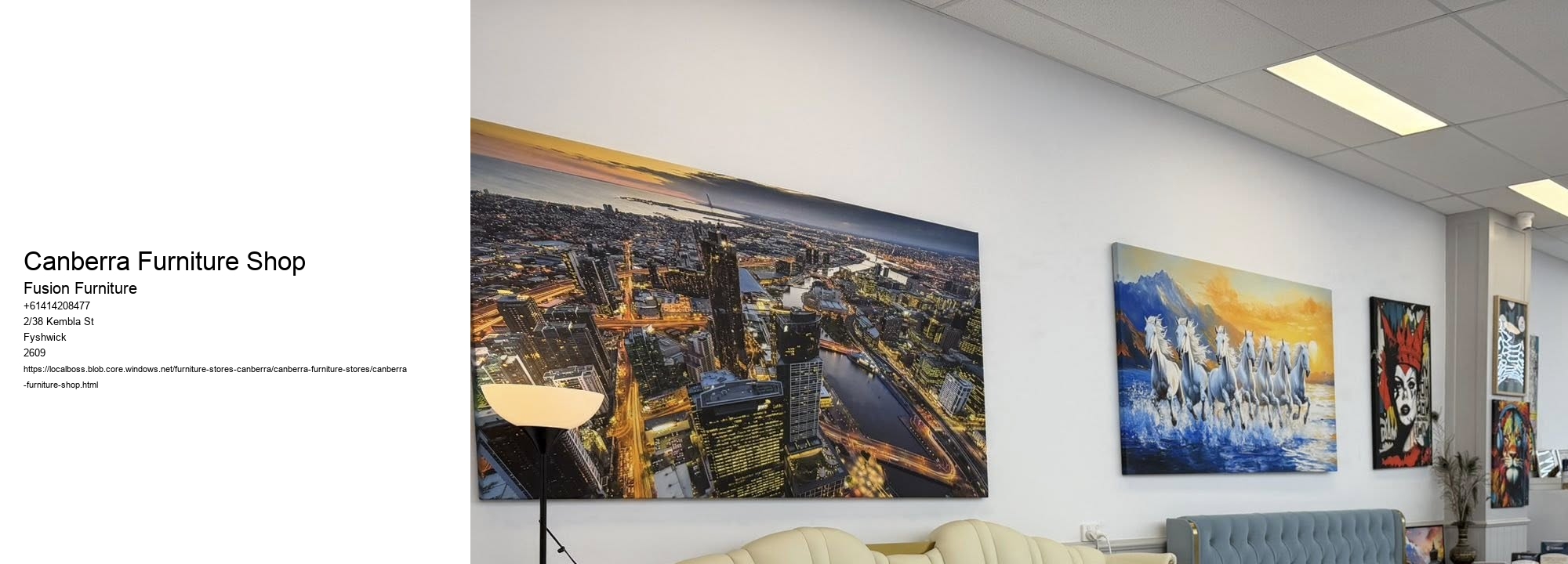
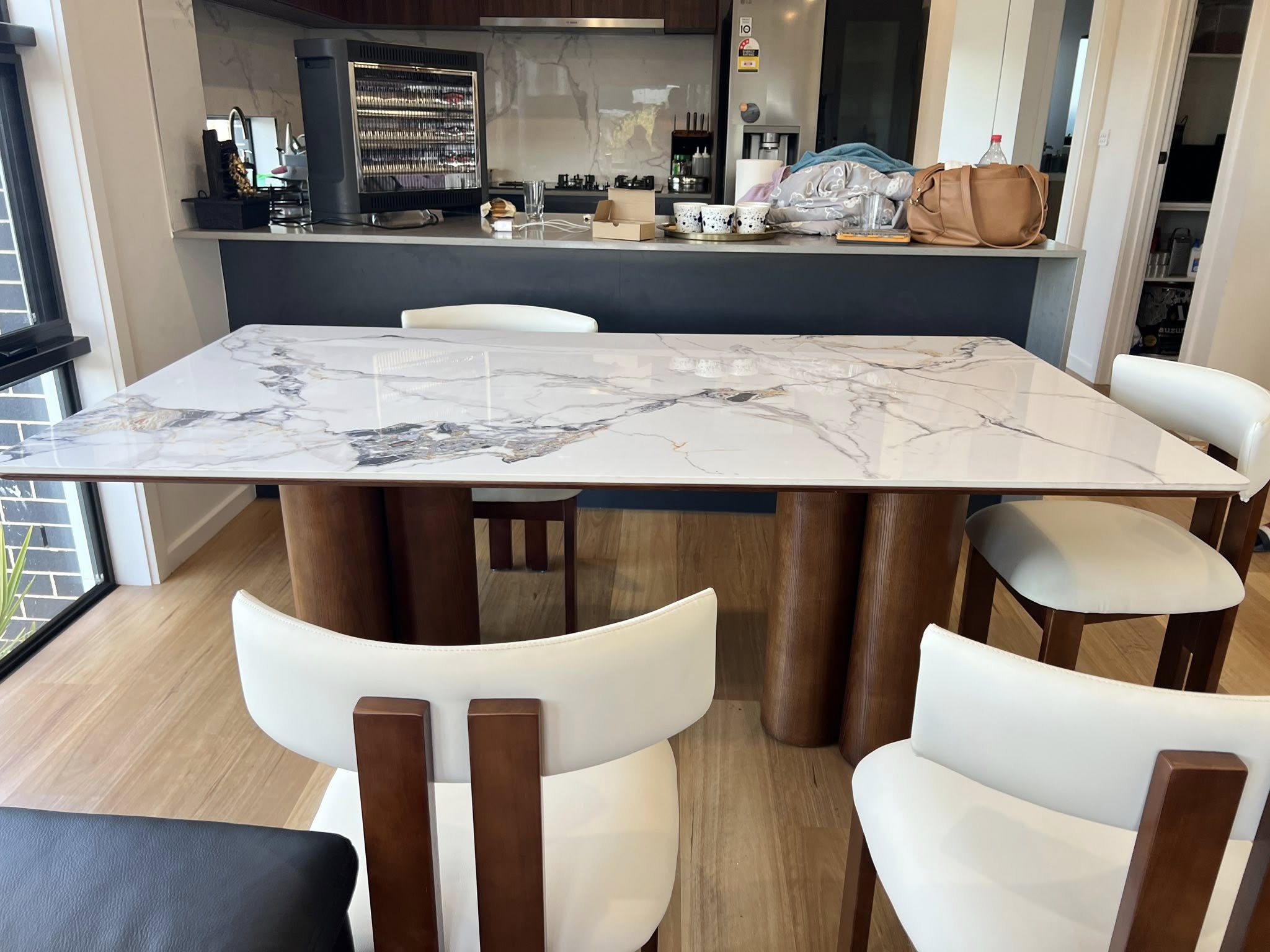
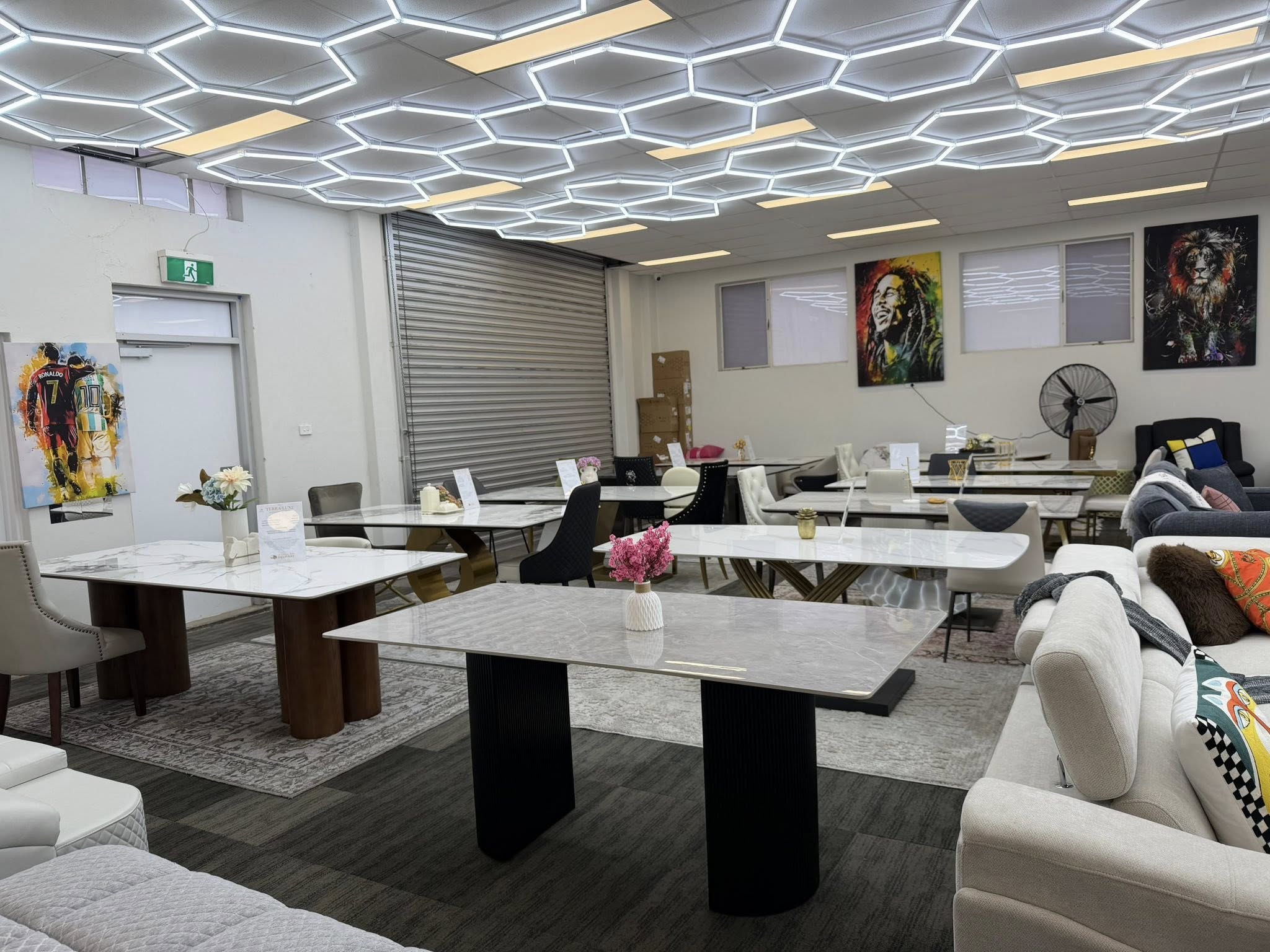



![Axel Springer Tower [de], Berlin](https://www.wikipedia.org/wiki/File%3A12-03-01-axel-springer-by-RalfR-28.jpg)


![Throne of Dagobert; 19th and 12th centuries (backrest); gilt bronze; unknown dimensions; Cabinet des Médailles (Paris)[46]](https://www.wikipedia.org/wiki/File%3AParis_Mus%25C3%25A9e_Cluny_Tr%25C3%25B4ne_de_Dagobert_135.jpg)


![Romanian analogion; second quarter of the 16th century; carved, openwork and champlevé wood; 115 x 58 x 65 cm; from the Probota Monastery (Suceava County); National Museum of Art of Romania (Bucharest)[47]](https://www.wikipedia.org/wiki/File%3AAnalogion_MNaR_11162_%281%29.jpg)

![Sideboard; c.1524; wood; height: 144 cm; Château d'Écouen (Écouen, France)[48]](https://www.wikipedia.org/wiki/File%3A%25C3%2589couen_%2895%29%2C_ch%25C3%25A2teau%2C_%25C3%25A9tage%2C_appt_du_conn%25C3%25A9table_8.jpg)
![Wardrobe; c.1530; carved walnut; height: 230 cm; Château d'Écouen[49]](https://www.wikipedia.org/wiki/File%3A%25C3%2589couen_%2895%29%2C_ch%25C3%25A2teau%2C_%25C3%25A9tage%2C_appt_du_conn%25C3%25A9table_2.jpg)

![Cupboard; c.1570; wood; height: 246 cm; Château d'Écouen[50]](https://www.wikipedia.org/wiki/File%3A%25C3%2589couen_Ch%25C3%25A2teau_d%2527%25C3%2589couen_Innen_Mus%25C3%25A9e_national_de_la_Renaissance_Schrank_1.jpg)
![Cupboard; c. 1580; walnut and oak, partially gilded and painted; height: 2.06 m, width: 1.50 m; Louvre[51]](https://www.wikipedia.org/wiki/File%3AArmoire_Louvre_OA_6968.jpg)
![Baroque four-poster bed from the Château d'Effiat; c.1650; natural walnut, chiselled Genoa silk velvet and embroidered silks; 295 cm; Louvre[55]](https://www.wikipedia.org/wiki/File%3ADecorative_arts_in_the_Louvre_-_Room_32_D201903_%28cropped%29.jpg)
![Baroque pier table; 1685–1690; carved, gessoed, and gilded wood, with a marble top; 83.6 × 128.6 × 71.6 cm; Art Institute of Chicago (US)[56]](https://www.wikipedia.org/wiki/File%3AFrancia%2C_tavolo_da_parete%2C_1685-90_ca.jpg)
![Baroque cupboard; by André Charles Boulle; c.1700; ebony and amaranth veneering, polychrome woods, brass, tin, shell, and horn marquetry on an oak frame, gilt-bronze; 255.5 x 157.5 cm; Louvre[57]](https://www.wikipedia.org/wiki/File%3AArmoire_aux_perroquets_du_Louvre.jpg)
![Baroque commode; by André Charles Boulle; c.1710-1732; walnut veneered with ebony and marquetry of engraved brass and tortoiseshell, gilt-bronze mounts, antique marble top; 87.6 x 128.3 x 62.9 cm; Metropolitan Museum of Art (New York City)[58]](https://www.wikipedia.org/wiki/File%3ACommode_MET_DP108742.jpg)
![Baroque slant-front desk; by Heinrich Ludwig Rohde or Ferdinand Plitzner; c.1715–1725; marquetry with maple, amaranth, mahogany, and walnut on spruce and oak; 90 × 84 × 44.5 cm; Art Institute of Chicago[59]](https://www.wikipedia.org/wiki/File%3AHeinrich_ludwig_rohde_o_ferdinand_plitzner_%28attr.%29%2C_scrittoio_a_ribalta%2C_magonza_1720_ca.jpg)


![Rococo slant-top desk; c.1750; oak, kingwood marquetry, amaranth wood, satiné, gilt bronze; unknown dimensions; Musée des Arts Décoratifs (Paris)[60]](https://www.wikipedia.org/wiki/File%3ASecr%25C3%25A9taire_en_pente_Paris_1745_-_Mus%25C3%25A9e_des_arts_d%25C3%25A9coratifs_%28Paris%29_20210629_152741.jpg)

![Bureau du Roi (Rococo); by Jean-François Oeben and Jean Henri Riesener; 1760–1769; bronze, marquetry of a variety of fine woods and Sèvres porcelain; 147.3 x 192.5 x 105; Palace of Versailles (Versailles, France)[61]](https://www.wikipedia.org/wiki/File%3ABureau_du_Roi_vue_de_face_avec_pi%25C3%25A8ce.jpg)
![Louis XVI style commode of Madame du Barry; by Martin Carlin (attribution); 1772; oak base veneered with pearwood, rosewood and amaranth, soft-paste Sèvres porcelain, bronze gilt, white marble; 87 x 119 cm; Louvre[62]](https://www.wikipedia.org/wiki/File%3ACommode_de_la_comtesse_du_Barry_%28Louvre%2C_OA_11293%29.jpg)
![Louis XVI style roll-top desk of Marie-Antoinette; by Jean-Henri Riesener; 1784; oak and pine frame, sycamore, amaranth and rosewood veneer, bronze gilt; 103.6 x 113.4Â cm; Louvre[63]](https://www.wikipedia.org/wiki/File%3ASecr%25C3%25A9taire_%25C3%25A0_cylindre_de_Marie-Antoinette_%28Louvre%2C_OA_5226%29.jpg)
![Louis XVI style writing table of Marie-Antoinette; by Adam Weisweiler; 1784; oak, ebony and sycamore veneer, Japanese lacquer, steel, bronze gilt; 73.7 x 81. 2Â cm; Louvre[63]](https://www.wikipedia.org/wiki/File%3ATable_%25C3%25A0_%25C3%25A9crire_%25C3%25A0_pupitre_de_Marie-Antoinette_%28Louvre%2C_OA_5509%29.jpg)


![Empire console table; 1804–1814; mahogany, gilded bronze, chiseled gilded bronze and fossil gray marble; 91.5 x 154 x 73.5 cm; Musée des Arts Décoratifs (Paris)[64]](https://www.wikipedia.org/wiki/File%3AConsole_%28France%2C_premier_Empire_1804-1814%29_-_Mus%25C3%25A9e_des_arts_d%25C3%25A9coratifs_%28Paris%29_20210629_154120.jpg)
![Empire throne; by Bernard Poyet and François-Honoré-Georges Jacob-Desmalter; 1805; carved and gilded wood, covered in red velvet with silver embroidery; 160 x 110 x 82 cm; Musée des Arts Décoratifs[65]](https://www.wikipedia.org/wiki/File%3ATr%25C3%25B4ne_de_Napol%25C3%25A9on_1er_en_provenance_du_Corps_l%25C3%25A9gislatif_-_Exposition_Versailles.jpg)

![King of Rome's Cradle (Empire); by Pierre-Paul Prud'hon, Henri Victor Roguier, Jean-Baptiste-Claude Odiot and Pierre-Philippe Thomire; 1811; wood, silver gilt, mother-of-pearl, sheets of copper covered with velvet, silk and tulle, decorated with silver and gold thread; height: 216Â cm; Kunsthistorisches Museum (Vienna, Austria)[66]](https://www.wikipedia.org/wiki/File%3AAustria-03324_-_Cradle_of_Napoleon%2527s_Son_%2832936041295%29.jpg)


![Desk; designed by Frank Furness, made by Daniel Pabst; 1870–1871; walnut, walnut veneer, rosewood (knobs), brass, iron, steel and glass; 196.9 × 157.5 × 81.9 cm; Philadelphia Museum of Art (Philadelphia, USA)[67]](https://www.wikipedia.org/wiki/File%3ADesk%2C_designed_by_Frank_Furness%2C_1870-71%2C_Philadelphia_Museum_of_Art.jpg)


![Desk (Art Nouveau), presented at the 1900 Paris Exposition; by Émile Gallé; 1900; molded and carved oak, with chiseled and patinated bronze; height: 108.5 cm; Musée d'Orsay (Paris)[68]](https://www.wikipedia.org/wiki/File%3A%25C3%2589mile_gall%25C3%25A9%2C_bureau_%2527foresta_lorenese%2527%2C_1900.JPG)

![[icon]](https://www.wikipedia.org/wiki/File%3AWiki_letter_w_cropped.svg)